Canadian workplace guidance treats monitor position as an adjustable starting point rather than a single measurement for everyone.
Avoid lifting the chin
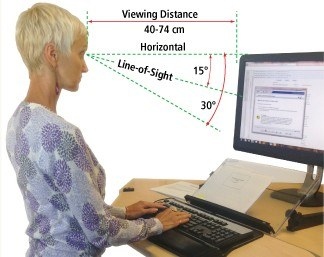
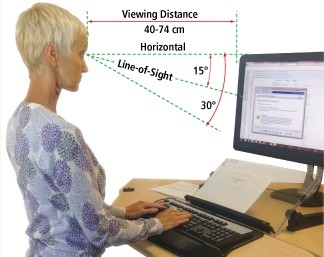
The Canadian Centre for Occupational Health and Safety explains that a screen placed too high can encourage uncomfortable neck and shoulder positions. Its guidance favors a natural forward and downward line of sight. A tall or portrait-oriented display should not put its top above the user's eyes, and people using progressive or bifocal lenses may prefer a slightly lower position.
Balance height with readability
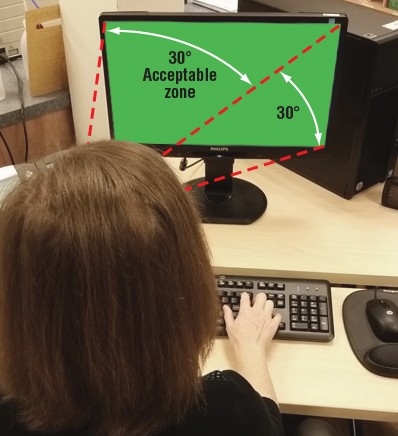
Viewing distance is part of the same adjustment. The fact sheet suggests roughly an arm's length as an initial estimate, tailored to the user and the task. If text becomes difficult to read, increasing its size is preferable to automatically pulling the screen closer. For multiple displays, frequently used screens should be arranged to reduce twisting, with comparable heights. The guidance emphasizes individual needs rather than treating a diagram as an inflexible rule.
Canadian workplace guidance treats monitor position as an adjustable starting point rather than a single measurement for everyone.


Leave a Comment
Comments (0)