
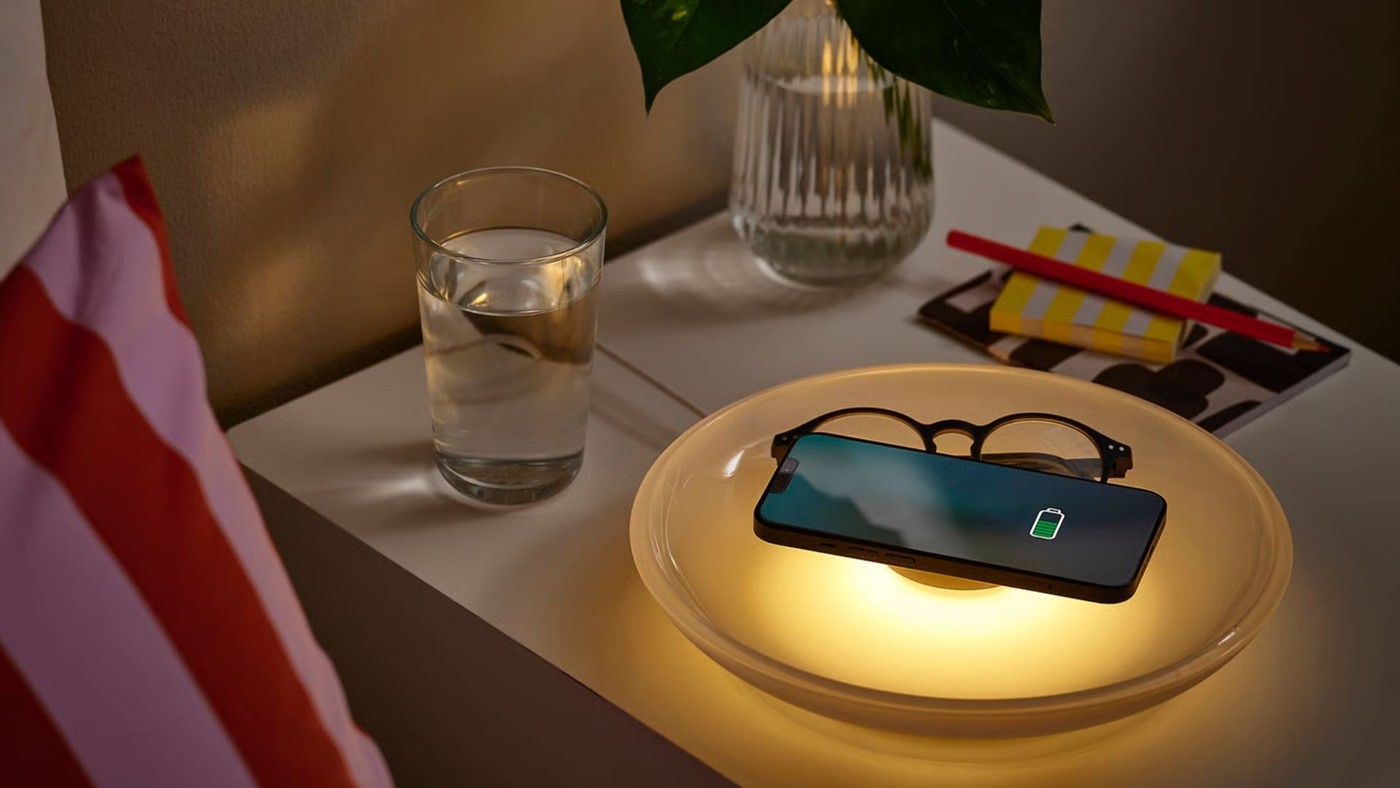
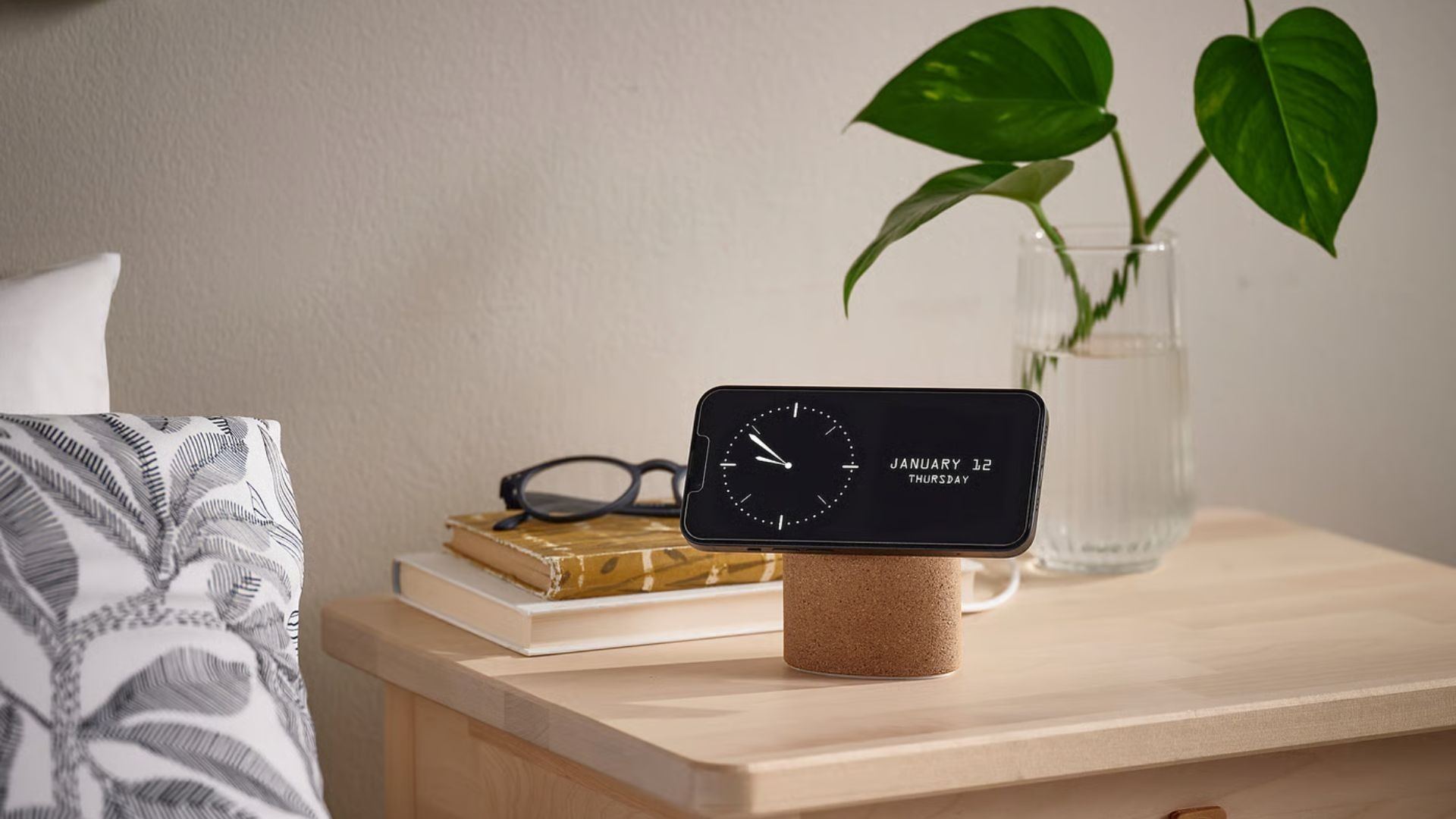
Tom's Guide highlights IKEA wireless chargers including a phone stand and a small unit with a USB-C cable that rolls away. The stand holds a compatible phone upright for viewing, while the compact version emphasizes clearing the charger away after use.
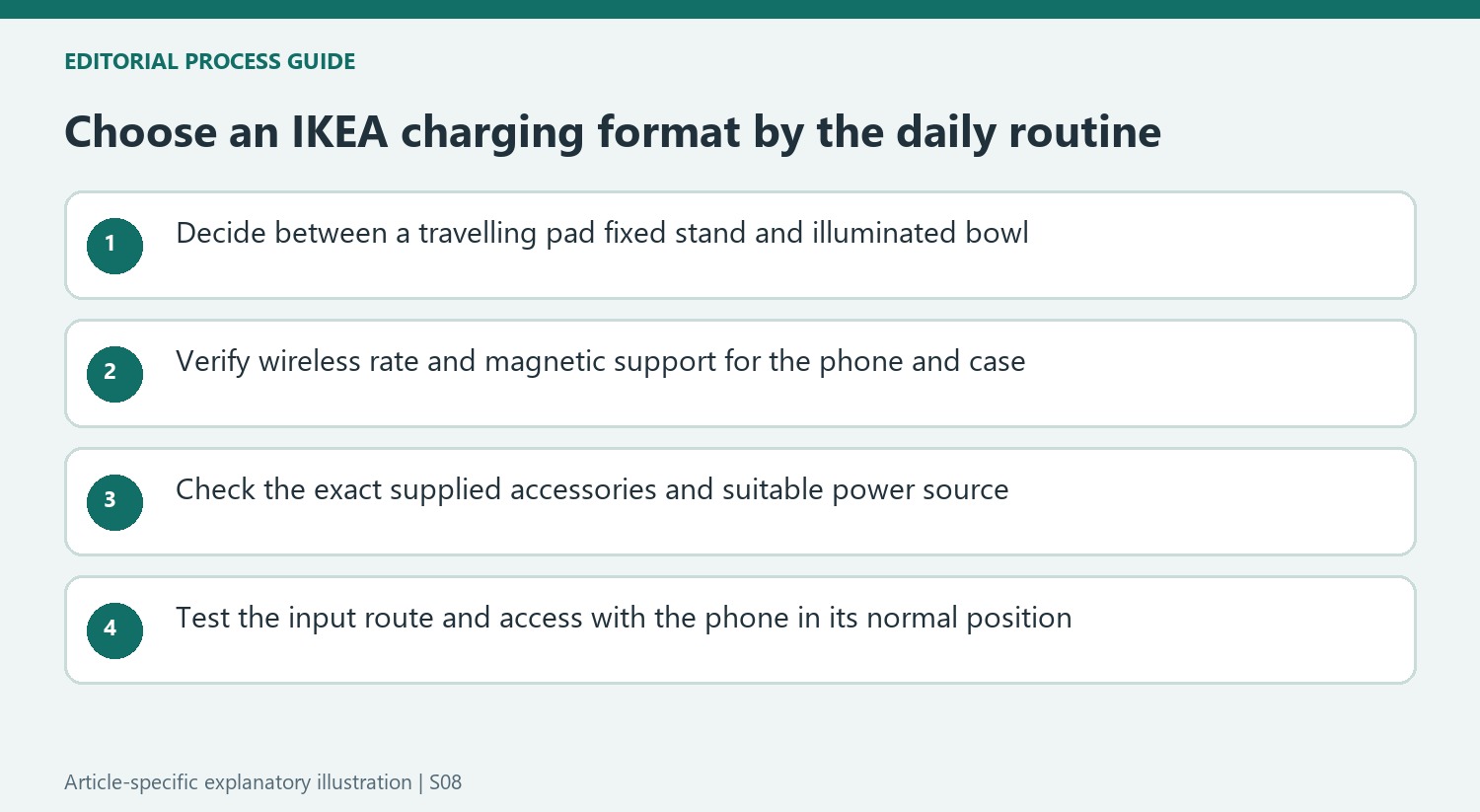
Choose the format around whether the charging point stays on the desk or travels. Confirm Qi and magnetic compatibility for the actual phone and case. Then route the required input cable so the chosen stand or pad sits securely without spare length crossing the keyboard area.
Choose between a stand, portable pad and storage bowl
The collection includes three different formats. The stand props the phone up for viewing, the compact donut-shaped pad can pop out as a grip, and the illuminated bowl also holds small everyday objects. Those formats solve different placement problems. A desk used for video calls may suit an upright stand, while the bowl needs space for both its charging area and the items stored around it.
Check magnetic support on the actual handset
The source describes Qi2 charging up to 15W and magnetic attachment for compatible MagSafe and Pixelsnap devices. It also points out that a Samsung Galaxy S25 needs a magnetic case to make use of the attachment. Check the exact handset and case combination before assuming that wireless charging support alone provides a secure hold. The connection method and supported speed are separate parts of compatibility.
Treat the cable feature as storage convenience
The compact charger's USB-C lead rolls away when it is not needed, reducing loose cable during storage. In use it still needs a suitable power source and a route that does not pull the phone or charger. The article's prices describe the range at publication, rather than guaranteed current availability. Select the format for the intended location and confirm the supplied accessories before relying on a single-box setup.
Choose the physical format around the location
The compact donut-shaped charger, upright stand and illuminated storage bowl are three different pieces rather than one adjustable product. The small silicone-feel pad emphasizes carrying and storage, including a pop-out grip form. The stand keeps the phone visible for notifications or a clock display. Decide whether the charger travels or stays at a fixed position before comparing the shapes only as decorative alternatives.
The bowl combines a charging location with light and storage for small everyday objects. That may suit a living-room table but requires room for the phone and the items placed around it. Follow the current product guidance for its charging area rather than assuming every part of the bowl supports a device. On a busy desk, the simpler upright stand may preserve a clearer working area even if the illuminated option is visually appealing.
Check speed and attachment as separate capabilities
The coverage describes Qi2 charging at up to fifteen watts and magnetic support for compatible MagSafe and Pixelsnap equipment. Confirm the exact device and case combination rather than translating wireless support into a secure magnetic hold. The source's Galaxy S25 example specifically requires a magnetic case for the attachment feature. That distinction matters when a handset is supported upright or used with the compact pad's grip-like form.
A phone's supported charging rate and the supplied power arrangement also affect the outcome. The article is an overview of the collection, not a measured comparison of charging times for several handsets. Keep the listed maximum separate from a demonstrated rate on a particular phone. For an iPhone clock-style placement, check that the handset and intended software mode support the desired behavior as well as the physical charging stand.
Treat the roll-away cable as a storage feature
The compact version's USB-C lead can be rolled away when the charger is put aside. That is useful for avoiding loose cable during storage, while the lead must still reach a suitable power source during use. Check the current supplied accessories before assuming that an adapter comes with every format. Choose the operating position with the input connected and leave enough slack that movement does not pull the pad or phone across the surface.
The quoted prices describe the range when the feature was published, and present regional availability may differ. Compare the complete package and intended location rather than selecting solely because all three examples were inexpensive in the source. A compact pad, visible stand and lit storage bowl can each be appropriate when their format supports the daily routine. The successful choice joins verified compatibility with secure placement and a sensible supply route, leaving the design preference to complete that practical match.
References
- IKEA quietly released a line of wireless chargers — my favorite costs $24 but looks like an expensive piece of decor. Tom's Guide; Millie Fender.


Bir Cevap Yaz
E-posta adresiniz yayınlanmayacak. Gerekli alanlar * ile işaretlenmişlerdir.