
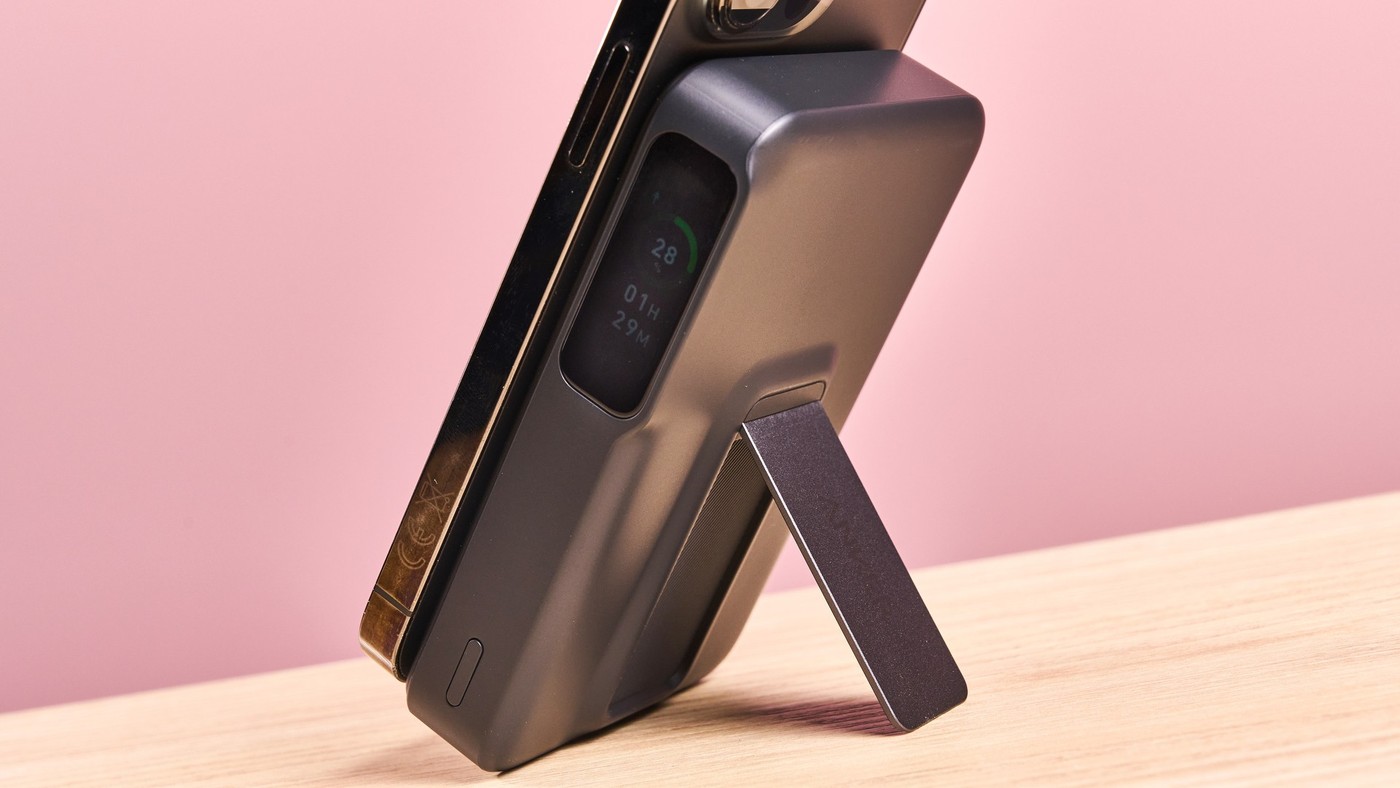
TechRadar's Anker MagGo ten-thousand-capacity review describes a sturdy power bank with a flip-out stand and battery display. A compatible phone can attach vertically or horizontally while drawing power from the bank. The reviewer found the construction reassuring but relatively heavy.
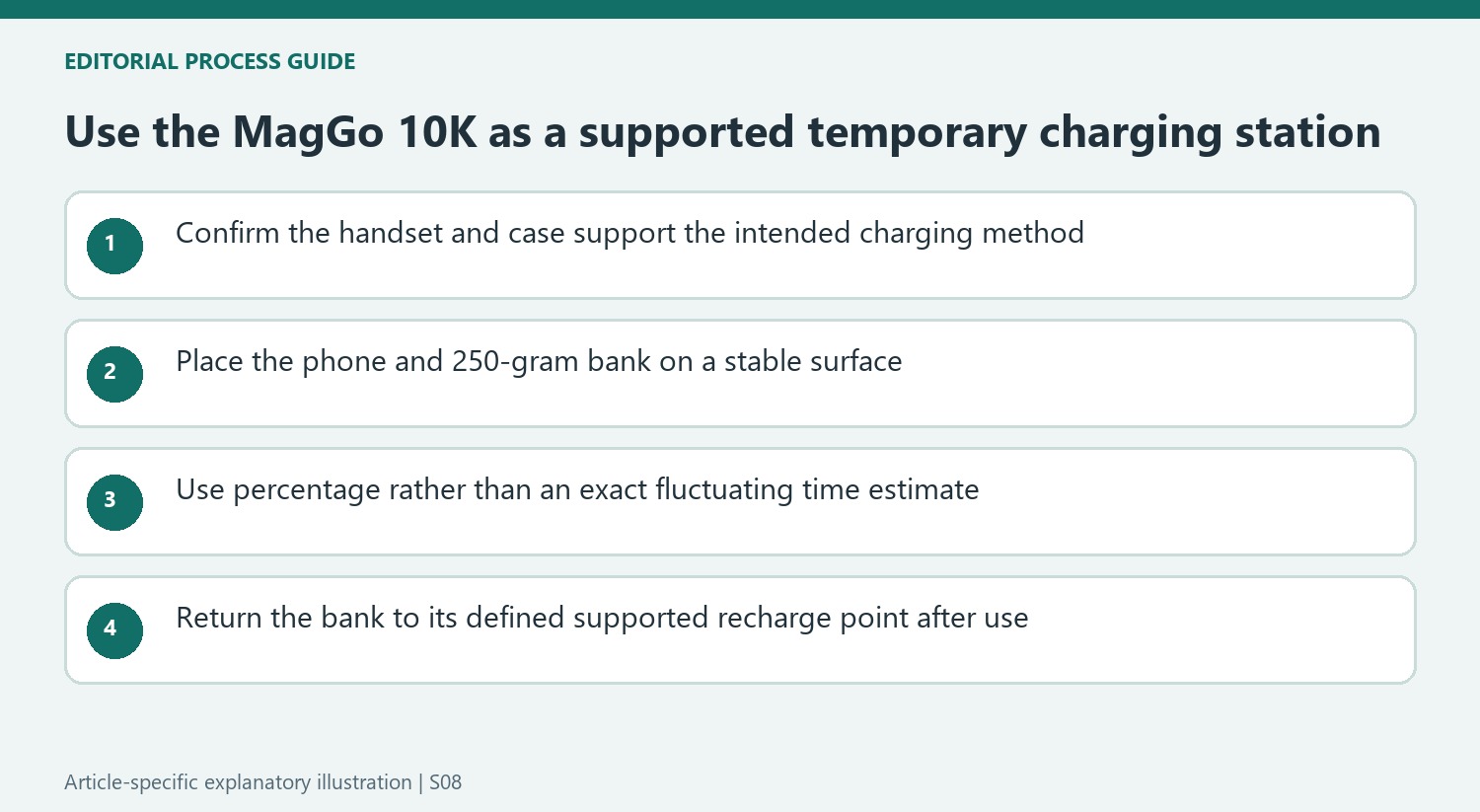
Place the assembly on a stable surface and fold the stand before packing. The battery still needs its own later charging connection, so define where that happens. Temporarily removing the wall lead can clear a work area without eliminating the need to organize charging cables overall.
Use the display for charge level rather than exact scheduling
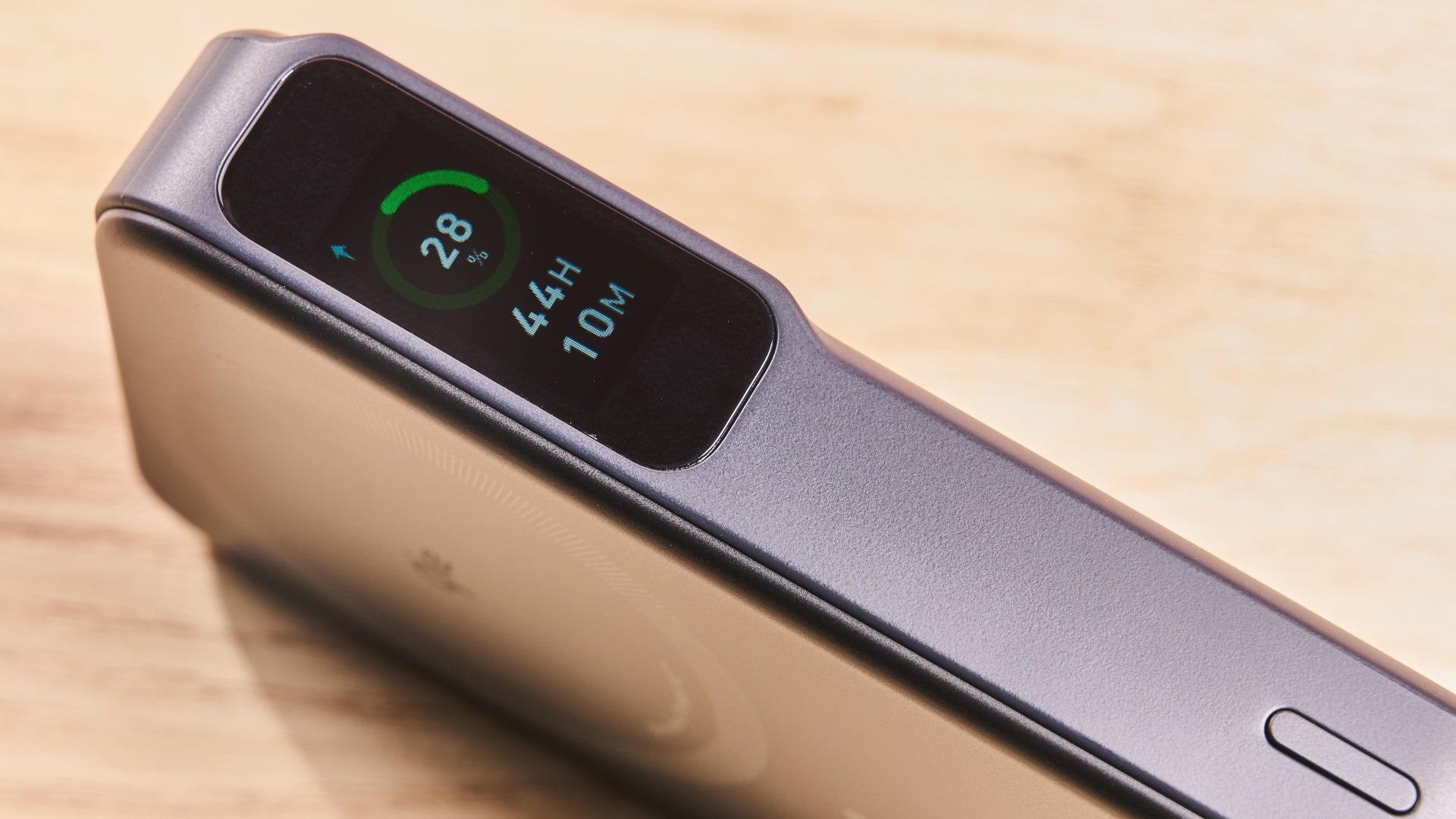
The screen reports remaining battery percentage and estimated operating or recharge time. The reviewer found the time estimate fluctuated considerably, so it was less reliable than the presence of a percentage reading. Do not schedule a meeting or departure around a precise minute prediction. The source measured approximately two hours and forty minutes to recharge the bank itself in its test setup.
Separate wired and wireless use cases
The model provides up to 27W through USB-C and 15W wirelessly according to the listed specification. The reviewer tested wireless charging with an iPhone and wired charging with a Pixel. The account does not confirm the same magnetic wireless behavior for every Android device. Check the exact handset and case rather than assuming the available USB-C charging result establishes wireless compatibility too.
Consider the weight of the combined assembly
The bank weighs about 250 grams before adding the phone. Its strong attachment and folding stand worked well on a surface, but the reviewer found the combination bulky for pocket use. Stand it on a stable part of the desk and keep its charging point defined for later replenishment. A magnetic connection supports convenient placement; it should not be treated as protection against the entire assembly being knocked over.
Choose the support role before adding a phone to the weight
The power bank weighs about 250 grams on its own, so the attached phone produces a more substantial object than the battery specification alone suggests. The source liked the strong magnetic connection and the smooth folding stand when used on a surface. Try that arrangement on a stable part of the desk, allowing room for the phone in the desired upright or horizontal orientation.
The reviewer considered the combined thickness and weight less suitable for carrying in a pocket while attached. That is a different use case from placing the assembly on a table to watch content. Check the exact handset and case fit rather than assuming a strong hold in the review guarantees every combination. A reliable attachment between two objects also does not anchor their combined weight to the furniture or prevent a knock from moving the entire assembly.
Keep observed partial charges separate from capacity predictions
The wireless iPhone test began at fifty percent and reached full in about two hours. The wired Pixel test also began halfway charged and finished in a little over an hour. Those are partial-charge observations on different devices, so do not double the times into a promised empty-to-full schedule. Battery demand changes across a charge, and another handset or operating condition can produce a different result.
Both reported tests left the bank at seventy-three percent, but that does not independently measure how many complete charges every phone will receive. The ten-thousand-milliamp-hour capacity and rated outputs help describe the product, while actual useful replenishment depends on the connected equipment and charging path. Preserve the source's concrete observations without turning the approximate remaining percentage into a guaranteed count of future full phone charges.
Define where the bank itself will recharge
The display makes remaining percentage easy to see, while its time estimates fluctuated noticeably during the review. Use that distinction when planning a departure or desk session rather than relying on an exact predicted finishing minute. The bank's own recharge took about two hours and forty minutes in the reported setup. It therefore still needs an appropriate cable, supply and regular place to replenish after the temporary cable-free phone session.
USB-C provides the listed wired output of up to twenty-seven watts, while wireless is listed at fifteen watts for the supported arrangement. The wired Android result does not verify equivalent magnetic wireless support for every Android phone. Check the current compatibility information for the exact device and case. This bank works most clearly as a sturdy supported charging companion when the extra weight, imperfect estimates and later input-cable routine fit the way the phone is actually used.
References
- Anker MagGo Power Bank (10K) review: a sturdy and practical charger with plenty of juice in the tank. TechRadar; Lewis Maddison.


Bir Cevap Yaz
E-posta adresiniz yayınlanmayacak. Gerekli alanlar * ile işaretlenmişlerdir.