
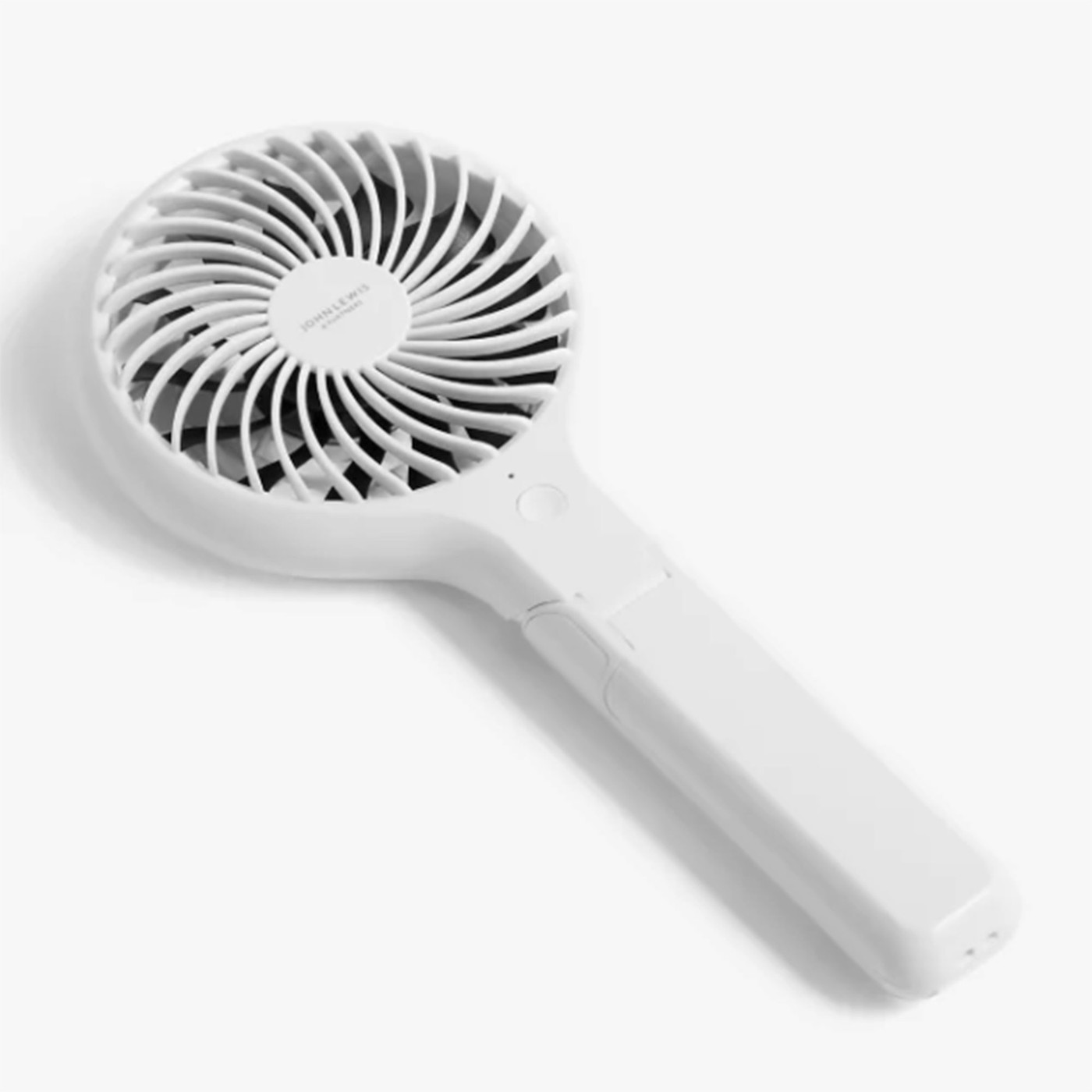
Ideal Home compares a slim desk fan with a rechargeable handheld model from John Lewis. The handheld design includes a fold-out stand and several speeds, allowing it to sit on a surface when it is not being carried.
Those details matter for office use. Check whether the stand directs airflow where needed and whether the battery lasts through the intended session. Keep loose papers clear and consider noise during calls. A personal fan circulates air around the user rather than providing the room-cooling function of air conditioning.
Distinguish rechargeable from continuously powered
The John Lewis fan charges over USB and then runs without a cable. The Amazon desk model needs its USB supply throughout use. That distinction affects portability more than the shared connector type. A permanent desk position may already have a convenient power point, while a train journey or moving between rooms favors the rechargeable option. Plan for the battery's later recharge even when the fan is used wirelessly.
Check airflow adjustment with the actual seat
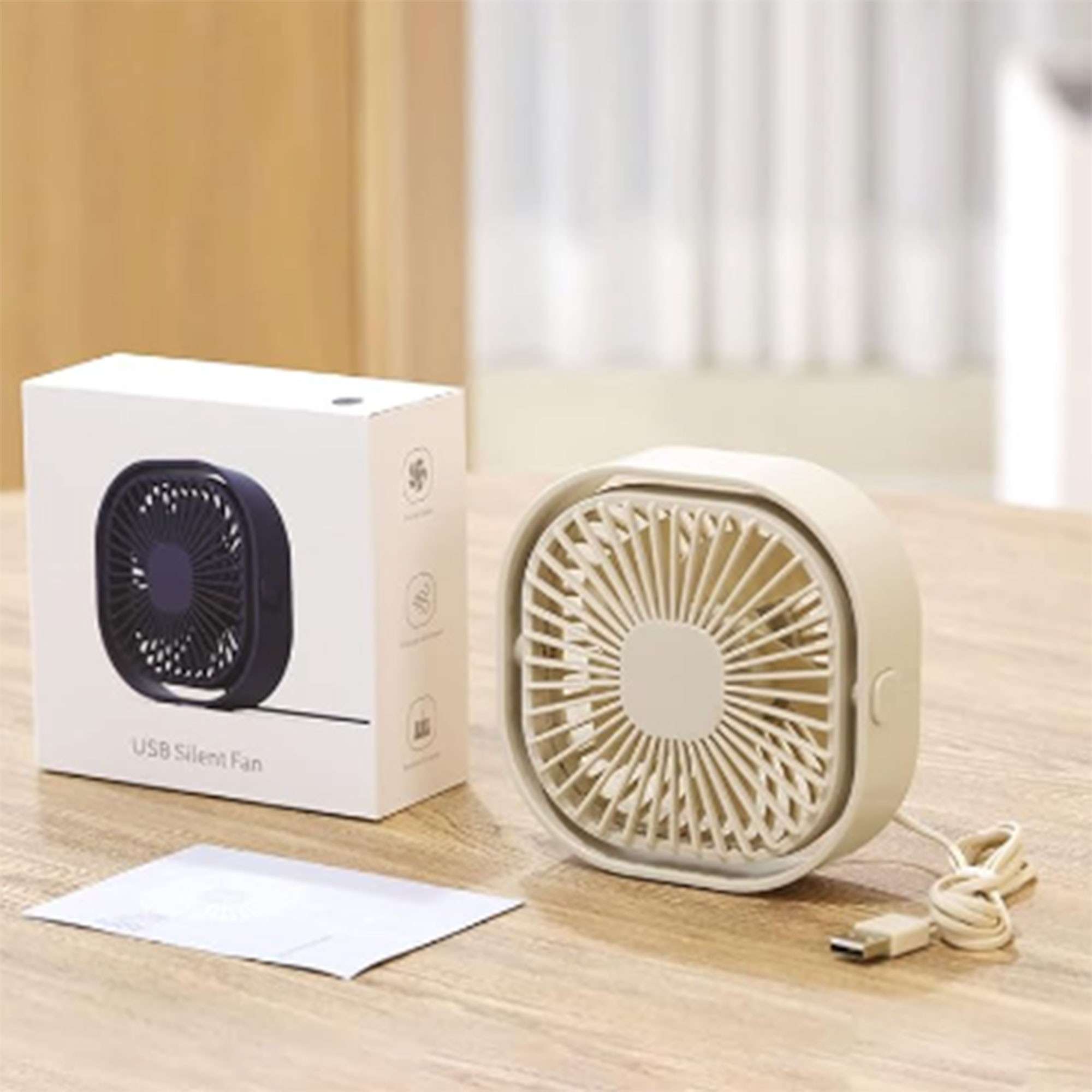
Both models offer three speeds in the source account. The desk fan can be tilted more freely, while the handheld fan's fold-out stand provides more limited positions. Set the fan where its base remains stable and its airflow reaches the user without scattering notes. The author preferred the desk model for desk-specific use even though the handheld version was the overall choice if buying only one.
Read the quietness and longevity comments in context
The reviewer found the Amazon unit quieter, while noting that no fan is truly silent. The John Lewis example had already served for over three years; the newer purchase had not been observed for the same period. Those are different levels of experience, so the article cannot establish equal lifetime durability. Its colors, sale prices and stock statements are also historical rather than current purchasing guarantees.
Choose between a battery routine and a permanent input lead
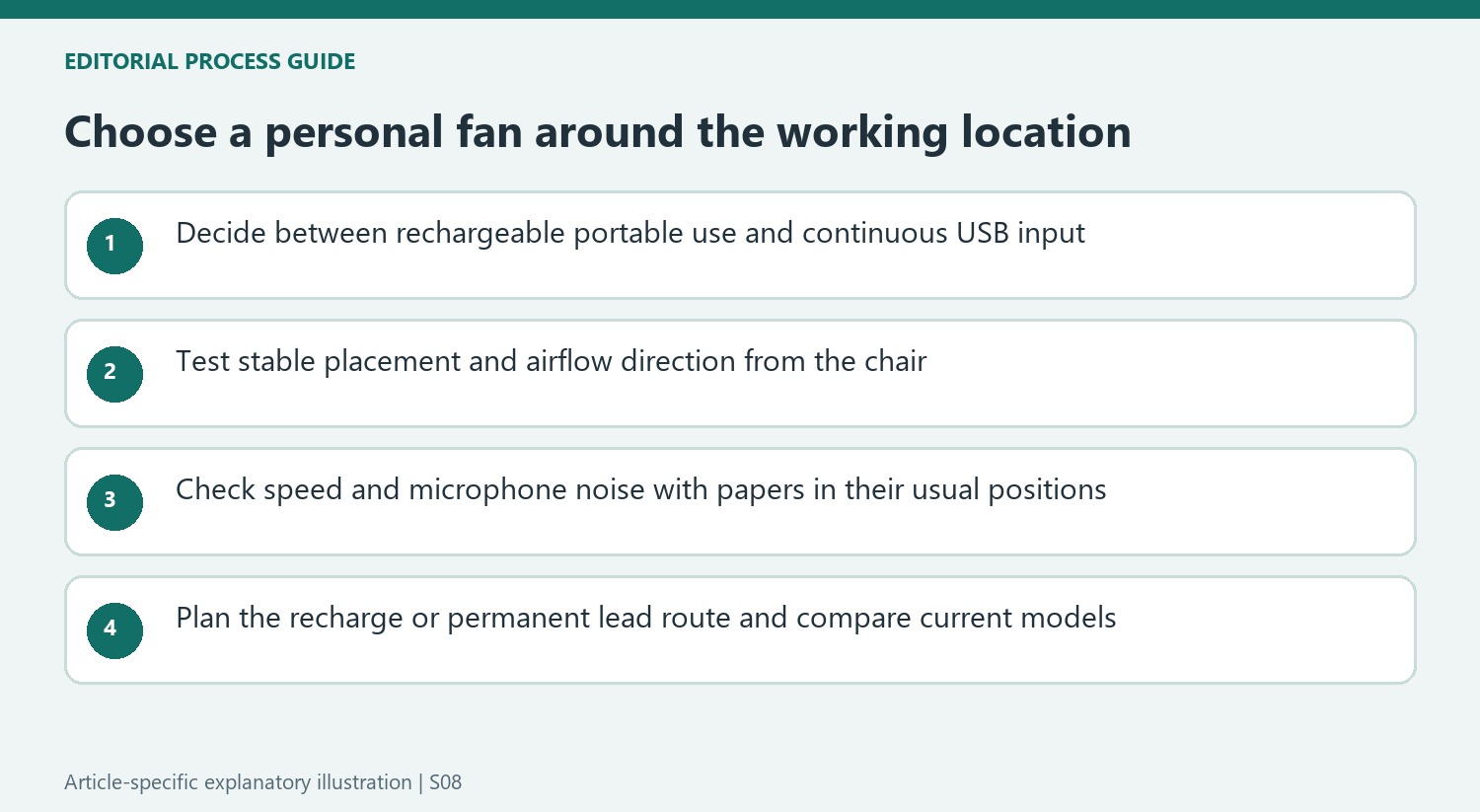
Both compared fans use USB, but that connector serves different purposes. The John Lewis handheld model charges its battery and can then operate away from a cable. The slim desk model needs its USB supply during use. Decide whether the fan normally stays beside the workstation or travels on a train and between rooms. The same connector shape does not give both products the same operating freedom.
A rechargeable model still needs a place and time to replenish its battery. Check the current model's input requirements and runtime information instead of assuming it lasts through every work session. A continuously powered desk fan instead needs a suitable available port or adapter and a relaxed lead route. Include the cable in the normal desk layout so moving the fan to aim it does not pull on its supply connection.
Try the stand and airflow direction from the actual seat
The source describes three speed settings on both models. The desk fan offered more flexible tilt, while the handheld model's folding stand provided a smaller set of useful positions. Place the candidate on a stable patch of the surface and check whether its airflow reaches the user at the desired angle. A portable product that stands upright is not automatically as convenient as a dedicated adjustable fan for one fixed desk.
Keep papers and other light objects out of the stream if they are likely to move, and test the sound during calls from the microphone position. The writer preferred the desk fan for desk-specific use despite choosing the John Lewis model overall if buying only one. Those conclusions address different priorities rather than contradicting each other. A useful choice follows the dominant routine instead of trying to rank portability and fixed-position adjustment as the same feature.
Keep quietness and long-term experience in context
The Amazon example was quieter in the writer's comparison, while the article rejected its absolute silent description. That is a relative listening observation rather than a measured acoustic guarantee for another room or speed setting. Check the current fan's behavior in the intended environment, especially if a nearby microphone or shared room makes sound more noticeable. The low-speed position may serve a different purpose from maximum airflow.
The John Lewis fan had more than three years of use behind the writer's positive experience. The newer desk purchase had not been observed for the same duration, so equal longevity should not be assumed. Historical colors, review counts and offers also require a current listing. Either personal fan circulates air around the user rather than refrigerating the whole room. Compare power routine, direction and acceptable noise first, keeping the source's individual durability experience separate from a promise about every unit.
References
- Having trouble staying cool while WFH? I tested two personal fans to see which worked best. Ideal Home; Thea Babington-Stitt.


Bir Cevap Yaz
E-posta adresiniz yayınlanmayacak. Gerekli alanlar * ile işaretlenmişlerdir.