
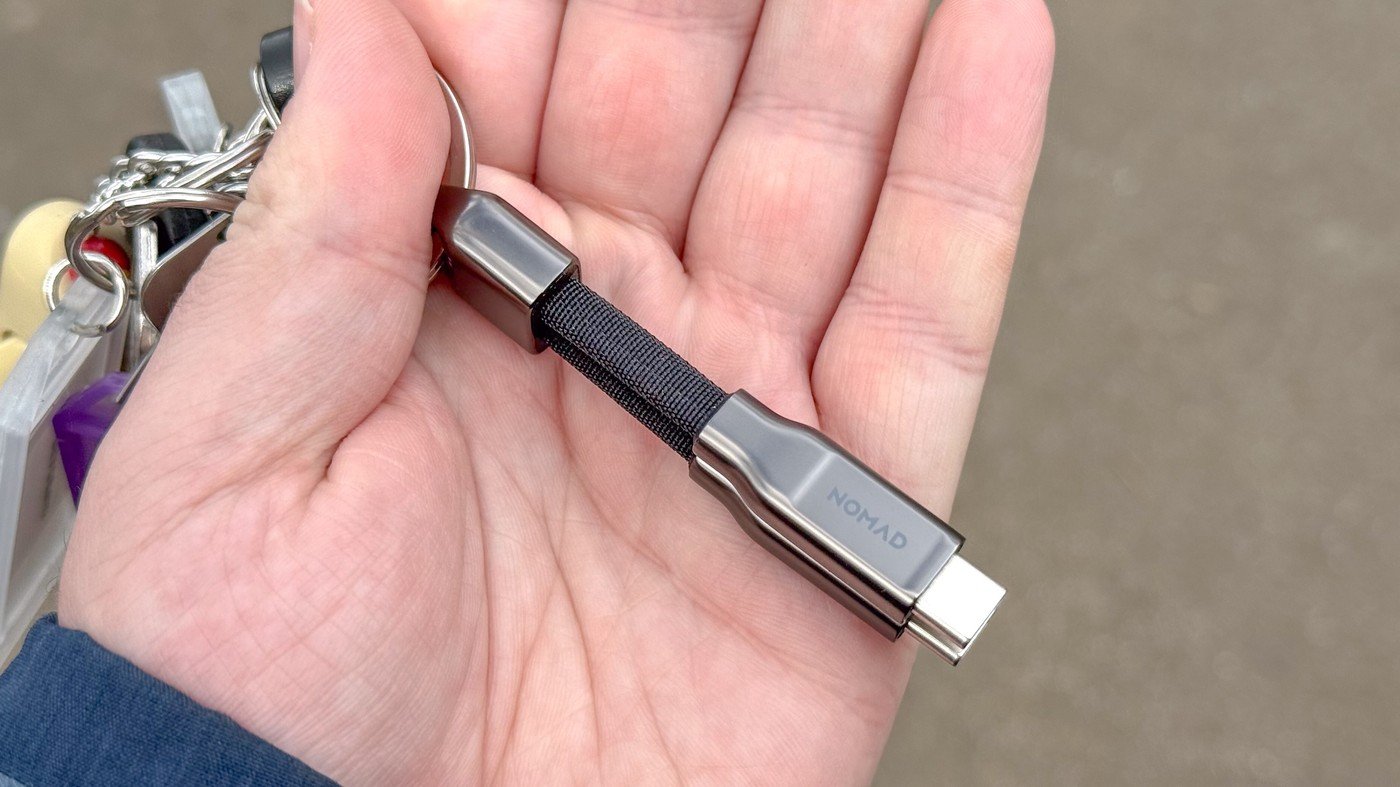
Tom's Guide describes Nomad ChargeKey as a short USB-C cable that folds with its connectors held together magnetically. Its keychain form provides an emergency lead without a full-length cable in the bag. The source discusses different generations with different power and data capabilities.
Check the exact version before relying on a charging or transfer figure. Such a short lead needs the devices close together and safely supported. It can reduce spare cable bulk, but it cannot replace a longer routed desk connection in every situation.
Distinguish the two cable generations
The original ChargeKey described in the promotion supports up to 60W and USB 2.0 data rates. The second-generation example the writer tested is rated for up to 240W and 10 gigabits per second. Those are materially different capabilities despite the shared name and pocket-sized shape. Verify the actual model listing before buying it for a laptop or a fast storage device.
Keep the test result separate from the maximum
The reviewer used the newer cable to deliver the usual 100W charging supply to a MacBook through a side USB-C port. The article explicitly says the writer lacked equipment to test the full 240W maximum. Consequently, that larger number is a specification, not an independently demonstrated result in this account. The connected charger and device still determine what power can actually be used.
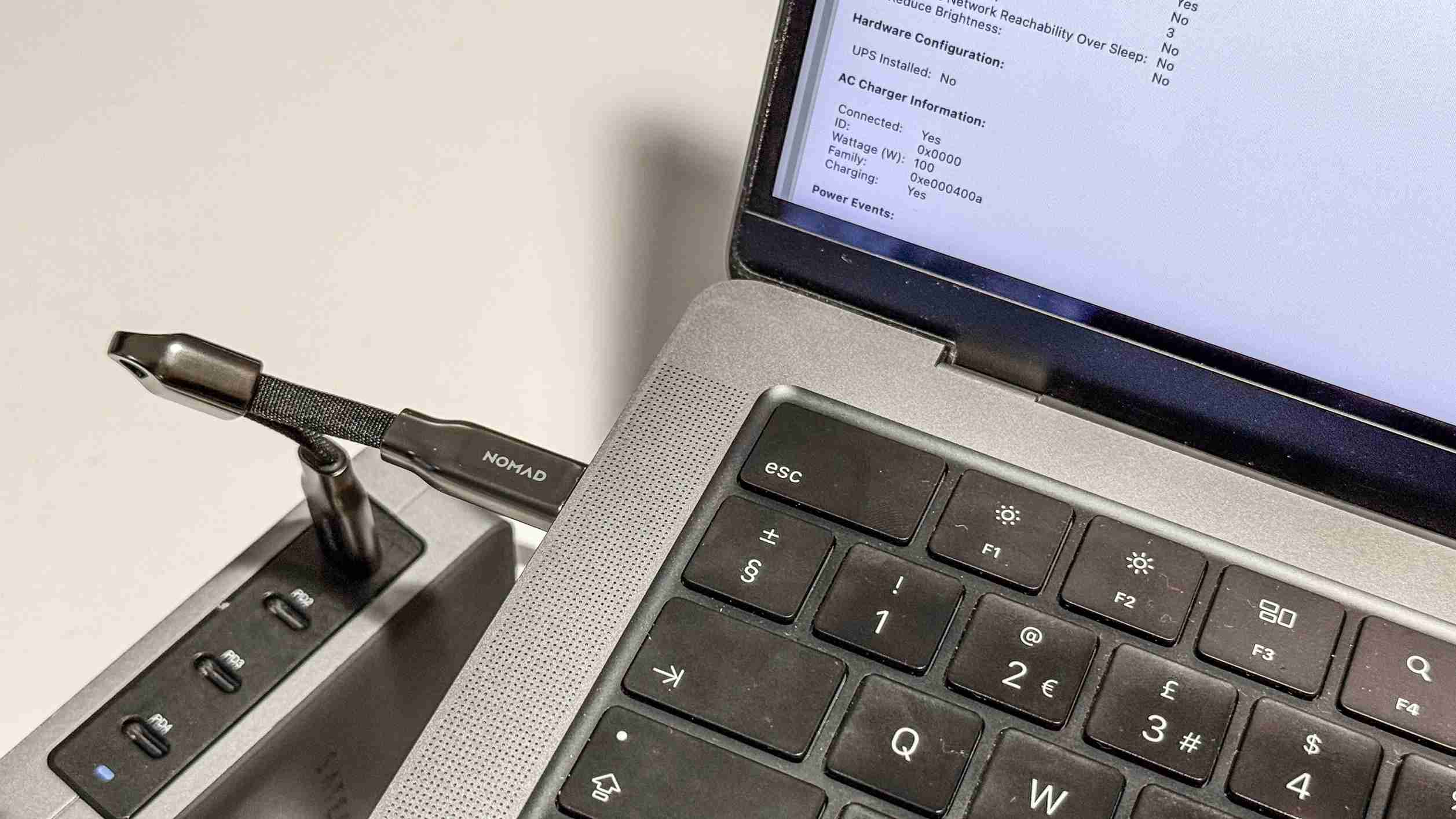
Plan a close, supported connection
At about 12 centimeters long, the cable places connected devices near each other. Its magnetized ends keep it folded on a keychain, while the braided section and metal-covered connectors give it a compact carrying form. It supplies a missing lead; it does not supply its own power. Choose a position where the phone, computer or charger can rest securely without the short connection taking their weight.
Match the exact generation to the intended job
The shared ChargeKey name covers materially different power and data limits in the article. The original cable's charging and USB 2.0 specification should not be replaced in a listing by the newer version's larger figures. Check the exact product generation before planning a laptop or external-storage connection. A small form factor and visually similar magnetized ends do not establish identical internal capabilities.
Separate the two intended jobs as well. A cable can be adequate for charging a phone while transferring a large file more slowly than desired. Conversely, a higher data specification does not create power beyond what the connected charger and device can negotiate. The source's comparison makes both upgrades interesting, but the actual host, peripheral and supply remain part of the complete connection rather than passive objects that automatically use every advertised maximum.
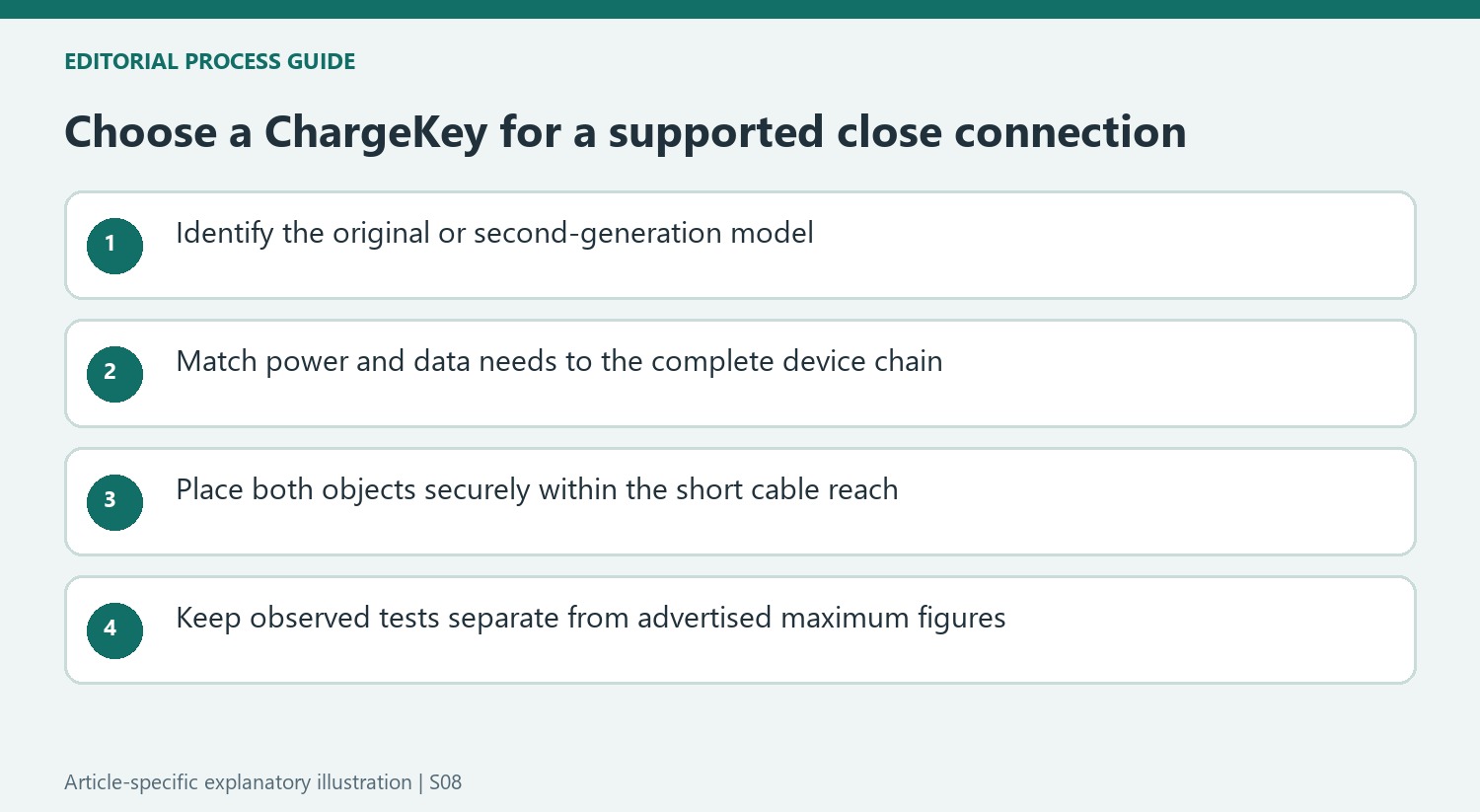
Keep the demonstrated tests within their limits
The reviewer observed the newer cable carrying the usual 100W charge to a MacBook. He explicitly lacked equipment to demonstrate the full quoted 240W capability. That distinction matters when describing evidence: one is a reported use result and the other a specification. It is more accurate to preserve both than to imply the maximum was tested simply because a demanding laptop charged successfully.
The timed transfer of a one-gigabyte video file also concerns a particular setup. It illustrates an observed difference between generations without establishing that every drive or computer reaches the maximum listed data rate. Compare the actual storage devices and workload if fast transfer is the main purpose. Large advertised power and data numbers should help identify a compatible cable, while practical performance still depends on the full chain used for the task.
Plan a secure close connection and realistic carrying wear
A roughly twelve-centimeter lead can solve the problem of having no cable at all, but it leaves very little freedom around a fixed outlet. Place both connected objects on appropriate support before plugging in. The cable does not contain a battery or charger, and its short length should not be used to hang a phone from a laptop or wall adapter. A longer routed lead may remain the better choice at a permanent desk.
Magnetic folding and the keychain loop make the spare easy to carry, with braided material and covered connector ends shaping the design. The source reports scuffing on the older version and had not yet subjected the newer finish to the same rough treatment. Keep that limitation rather than promising improved long-term wear from the changed plating alone. Historical promotional terms are separate from the current value of a compact emergency lead whose supported capabilities match the intended equipment.
References
- This USB-C cable fits on your keychain for emergency charging — and it's 20% off on Amazon right now. Tom's Guide; Richard Priday.


Bir Cevap Yaz
E-posta adresiniz yayınlanmayacak. Gerekli alanlar * ile işaretlenmişlerdir.