
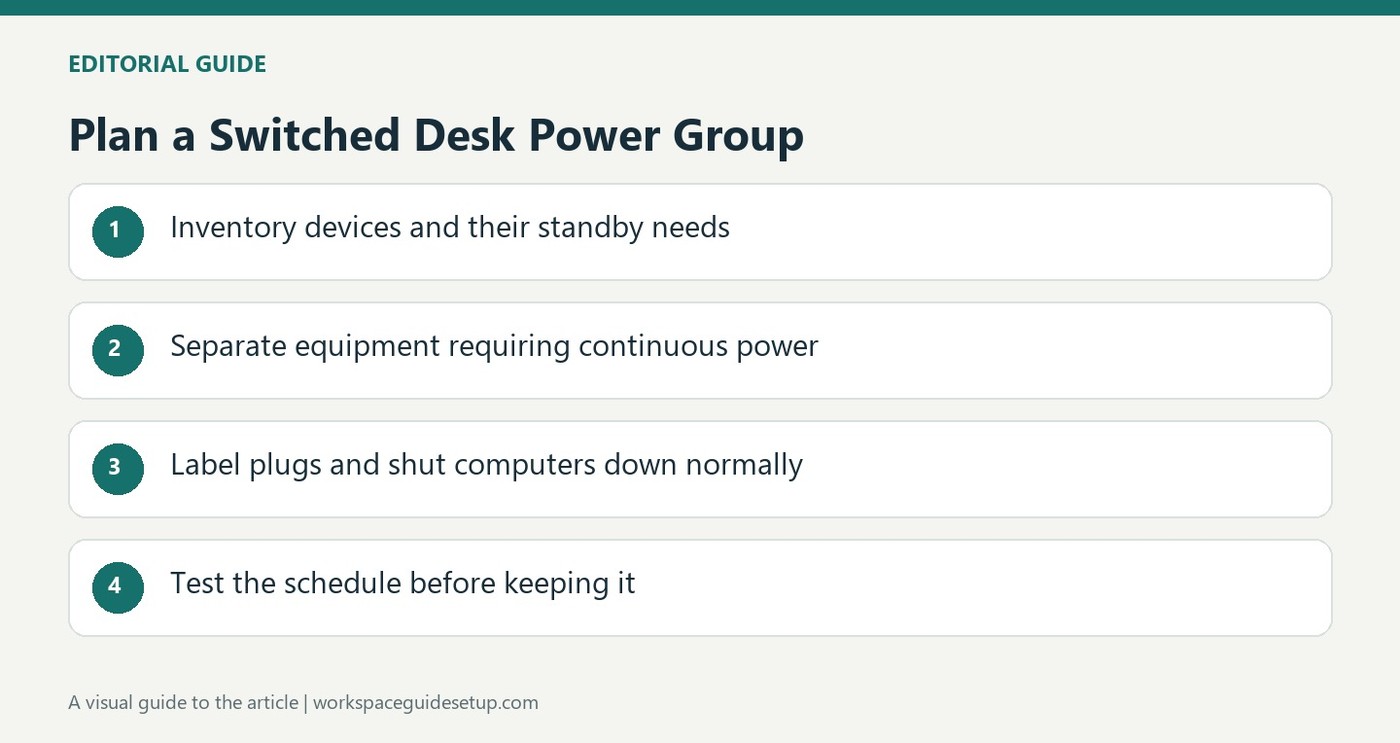
Tom's Guide discusses standby power used by equipment such as monitors, computers, printers and entertainment devices. A switched power strip can collect suitable plugs into one accessible point. Actual savings depend on the equipment and how it is used, not a universal monthly figure.
Identify devices that need continuous power before grouping them, and shut computers down properly. Respect the strip's rated load and avoid daisy-chaining extensions. Cable organization is most useful when each plug remains identifiable and the switch can be reached without pulling on leads.
Separate switched equipment from continuous services
The article groups entertainment gear separately from the home office. A master-controlled strip can switch selected peripherals when the main device stops, while a simple rocker or scheduled strip serves a different arrangement. A modem or an overnight recording device may need continuous power. Identify those exceptions before applying a schedule, and let computers complete their normal shutdown instead of using the strip as their operating-system power control.
Audit the actual devices first
The suggested starting point is an inventory of items with lights, displays and external adapters. Label each plug so the intended group is clear to anyone who uses the room. Some equipment takes time to restart or download information after power is restored. A brief trial is therefore useful before adopting an overnight routine, particularly if the workspace also handles scheduled jobs or communications.
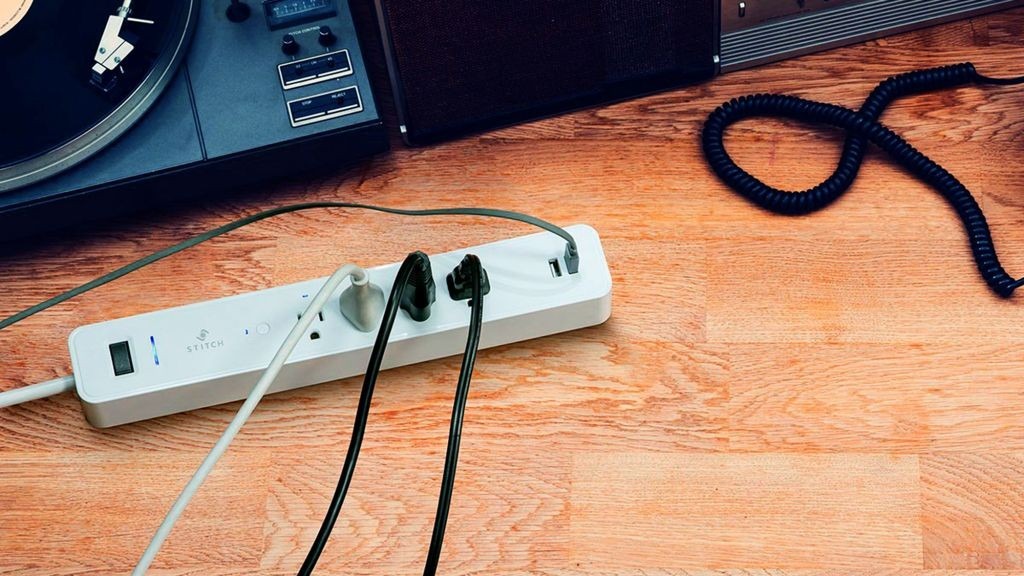
Treat the headline saving as one household's result
The source gives several different estimates and includes an example of a much smaller annual benefit in an efficient home. Standby demand, electricity prices and the time switched off all influence the outcome. Measure or compare the actual devices rather than expecting the author's monthly reduction. The practical change is making suitable idle equipment easy to disconnect together, with a schedule simple enough to maintain consistently.
Create a switched group without interrupting the wrong service
The source separates a home-office group from an entertainment group because their use patterns differ. A desktop, monitors and lamp may become idle together, whereas a recorder or network device may still have a job after the room is empty. List those exceptions before connecting everything to one switch. A clearly labeled always-on position can matter more than making the visible collection look perfectly uniform.
A master-controlled strip is also different from a simple rocker or a timed smart strip. It responds to the main device's state and controls selected peripherals, while a schedule follows a chosen time pattern. Choose the behavior around the equipment's actual needs and the current strip instructions. Computers should complete their normal shutdown before supply removal; the switch should not become a substitute for ending active work or allowing required operating-system tasks to finish.
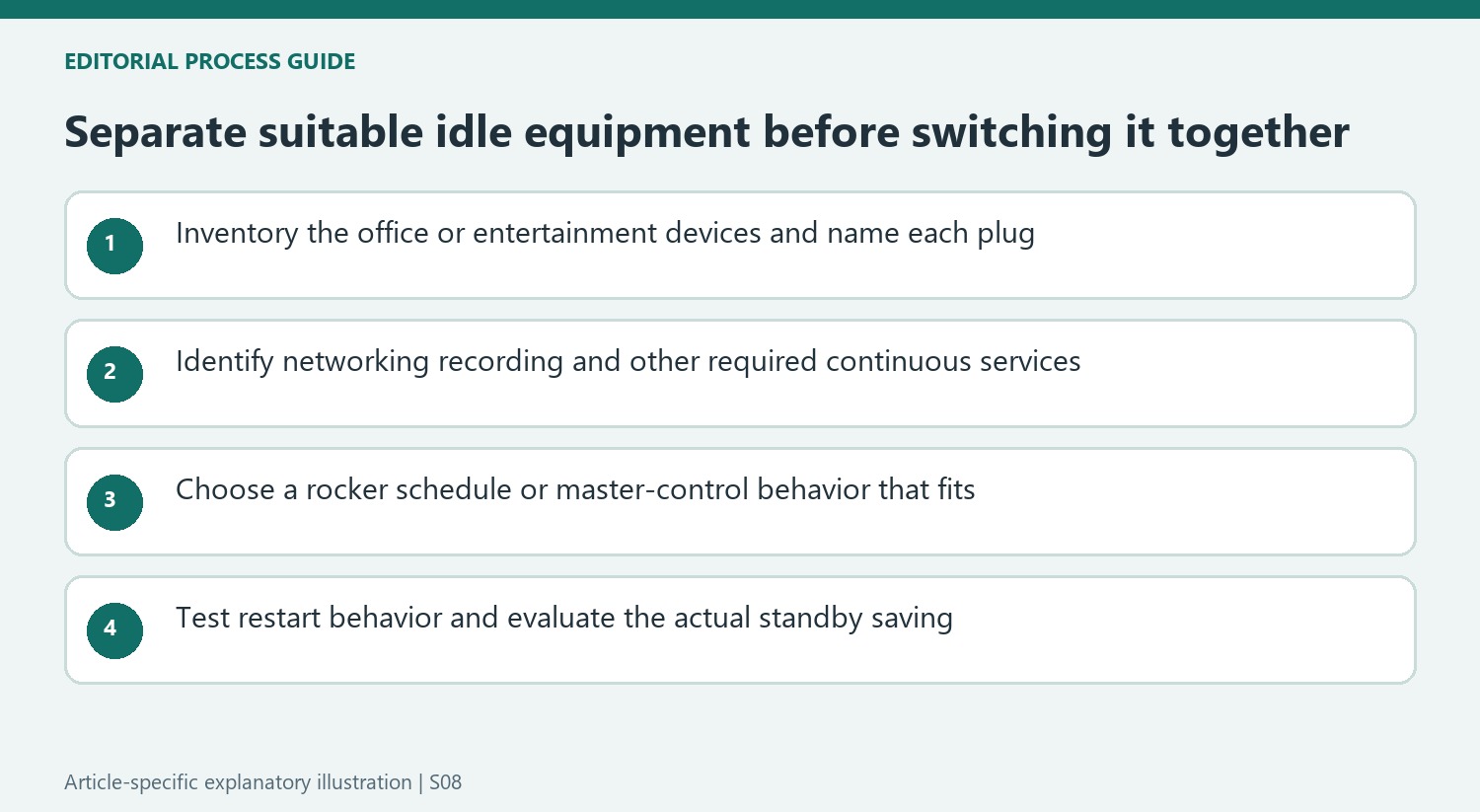
Test the routine before assuming it is convenient
The suggested night-time inventory looks for status lights, displays and external supplies as prompts to investigate standby use. Those visual signs identify candidates, not the amount of electricity each consumes. Label the plugs with device names so another person can understand the grouping. Then try a short off-and-on cycle at a suitable time and check whether the affected equipment returns to the required state.
Some devices need time to restart or obtain information after power returns. That can make an otherwise sensible overnight schedule inconvenient for the morning's first task. Check scheduled recording, communications and work requirements before adopting a recurring routine. The source warns that repeatedly overriding an awkward schedule can undermine the method, so choose one simple enough to maintain rather than maximizing disconnected hours without considering how the room is used.
Compare an observed result with the household that produced it
The headline's monthly reduction is the author's account, while the article also supplies several expert estimates and an example of much smaller annual savings in an efficient home. Those figures are not interchangeable predictions for another desk. Equipment standby demand, time without power and the local electricity tariff determine the actual opportunity. Measure or compare the specific loads before buying a strip solely on an assumed payback period.
The cable benefit remains useful even where the energy saving is modest: a suitable accessible switch can group identifiable idle equipment. Keep the strip within its rated load, allow proper placement and avoid chained extensions. Check the instructions for both the strip and its connected devices. The strongest arrangement makes an appropriate set of equipment easy to disconnect while preserving the services that still need power, rather than treating every illuminated adapter as a guaranteed source of the same saving.
References
- I cut my energy bill by $20 a month with this simple power strip trick. Tom's Guide; Caroline Preece.


Bir Cevap Yaz
E-posta adresiniz yayınlanmayacak. Gerekli alanlar * ile işaretlenmişlerdir.