
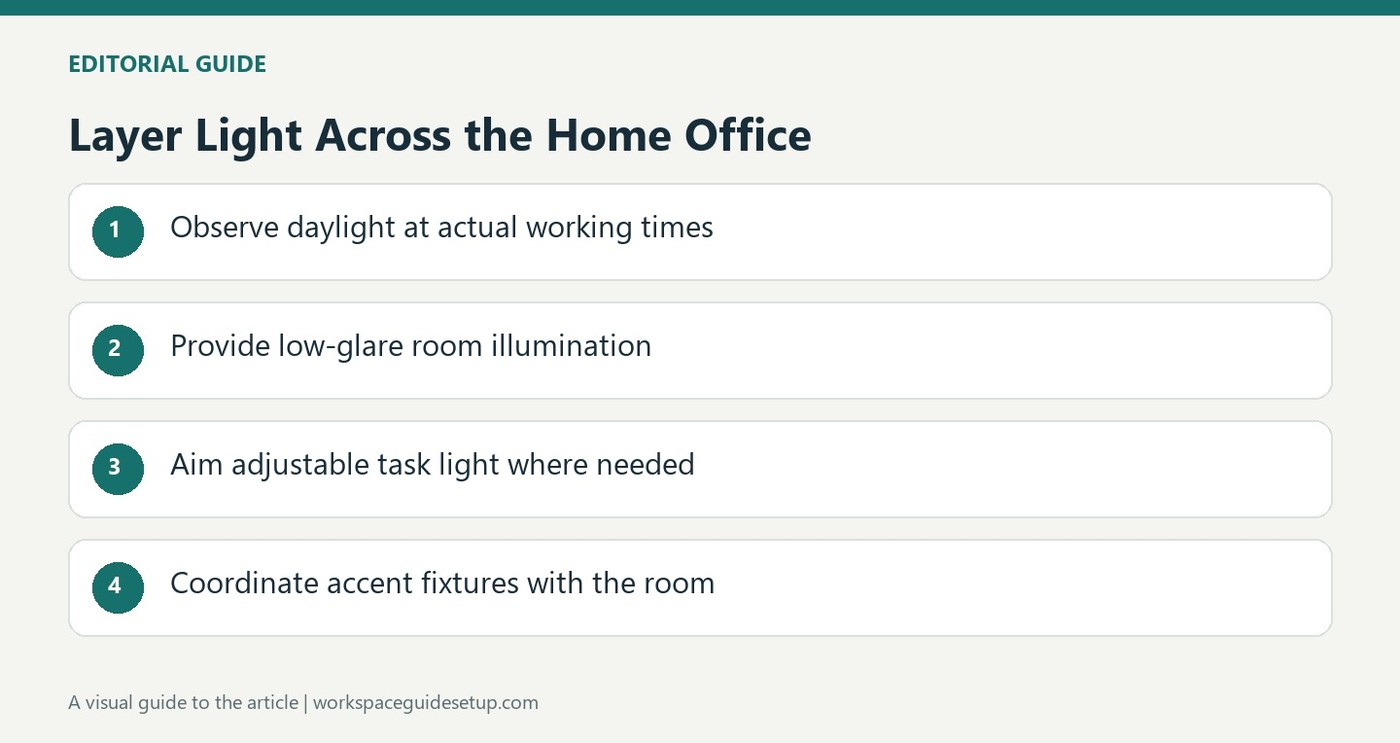
Homes & Gardens recommends combining general room illumination, task light and accent light with the daylight already available. A desk lamp alone may not address the wider room, while an overhead fixture may leave close work insufficiently lit.
Where a desk sits within custom cabinetry, wall-mounted or integrated lighting can free surface space. Plan those fixtures alongside shelves and equipment so beams reach the work area without glaring into the screen. Decorative style can follow the same room scheme while each light retains a clear practical role.
Plan for the time and type of work
The source recommends considering when individual tasks take place. A desk used for paper work after dark needs a different contribution from the lamp than a screen used beside a bright window. An adjustable arm can move the beam as the task changes. Look at the room in those actual conditions before choosing the final fixture positions, rather than judging the scheme only in daylight.
Use wall and floor positions where the surface is limited
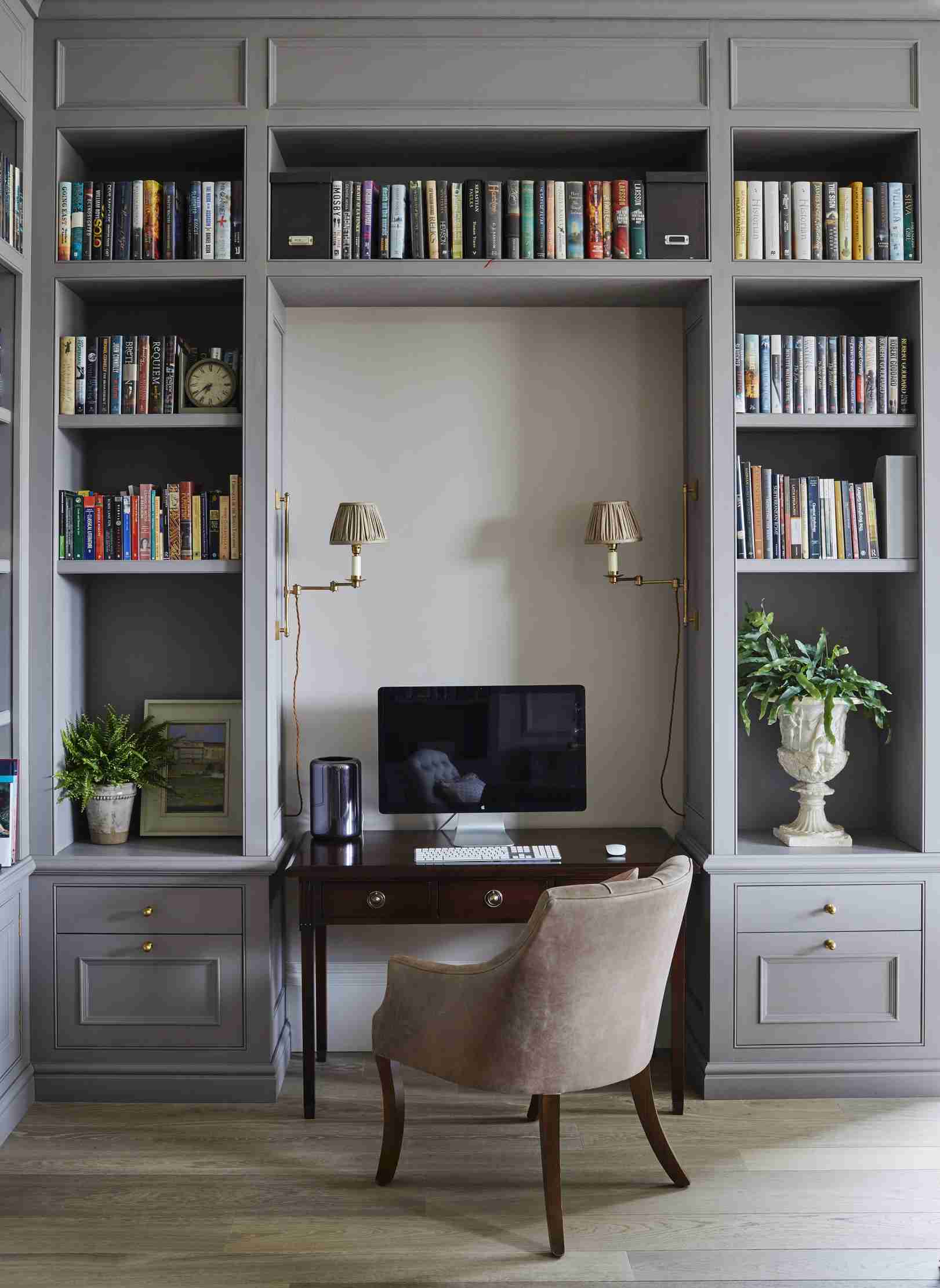
The featured cabinetry example directs lighting onto a built-in work area, leaving the desktop free. Another example uses a floor lamp across a shared desk. These show that task lighting need not always occupy a base beside the keyboard. Each alternative still needs appropriate reach and glare control, so arrange the furniture and light together instead of adding the fitting after shelves and monitors block the intended beam.
Coordinate materials after the light roles are clear
The article shows ceiling and desk fixtures repeating metal finishes used in cabinetry, and a colorful wall fitting adding character to a concealed study. Those details create a coherent room without requiring every fixture to look identical. Keep the decorative choice tied to the practical lighting role. An exposed bright source in the screen's reflection can remain distracting even when its finish matches the rest of the room.
Assign a job to each lighting layer
The guide distinguishes general room illumination, light for a particular task and accents that highlight part of the room. Those functions can come from different fixture types, with daylight contributing when available. Begin with the actual activities rather than purchasing several lamps simply to obtain more layers. A well-lit book and an evenly lit background require different directions of light even when both are useful at the same desk.
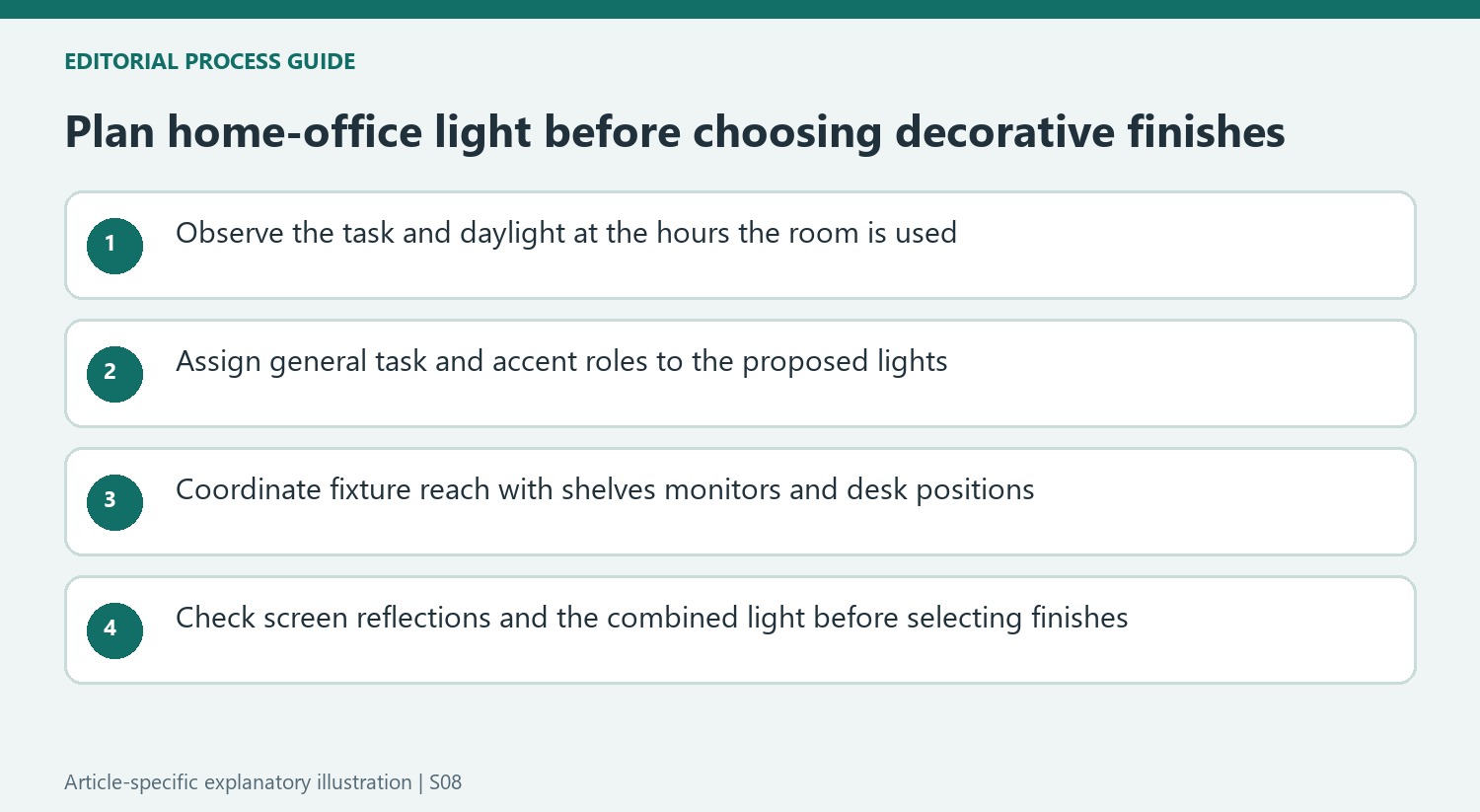
Observe the workspace during the hours it is normally occupied. A daytime screen position near a window may change substantially after sunset, while close paper work can still need a directed source in an otherwise bright room. The article recommends adjustable direction for changing activities. Choose a fixture whose reach allows that adjustment without placing an exposed bright point in the user's sightline or the monitor's reflection.
Plan the fixture alongside storage and furniture
The built-in cabinetry example uses directed lighting over the work area, preserving the desktop instead of adding a lamp base beside the keyboard. That approach is most useful when planned with the shelves and niche dimensions. Check whether the proposed beam actually reaches the working surface after the monitor and stored objects are installed. A fitting above a cabinet can look integrated while leaving the intended task in shadow if the furniture and light are chosen independently.
The guide also shows a floor lamp serving a shared desk. That is another way to keep the surface clear, but it needs a suitable floor position, reach and supply route. Compare the practical operating area rather than assuming a floor-standing source illuminates both work positions equally. Where fixed electrical work is involved, use the appropriate installation method and qualified help required for the fitting, keeping the design decision separate from an improvised mounting solution.
Coordinate finishes only after checking the combined light
The examples repeat metal finishes between lighting and cabinetry or use a colorful wall fitting to give a small study character. These are ways to connect the workspace with the home without making every fixture identical. Choose the finish after establishing each light's role and direction. A matching decorative lamp remains distracting if the bulb is reflected in the display or its base blocks the normal work area.
Wall color and surface finish also influence how the room responds. The guide contrasts pale reflective surroundings with darker spaces, so a single product's nominal output cannot predict the same result everywhere. Check the combined scheme from the normal chair position and with the actual task in place. Keep comfort and health claims appropriately qualified: the useful design method is to balance room light, daylight and directed work illumination, then adjust the real room rather than promising that a particular arrangement prevents every instance of strain.
References
- Home office lighting ideas – for ceilings, desks, and walls. Homes and Gardens; Sarah Warwick.


Bir Cevap Yaz
E-posta adresiniz yayınlanmayacak. Gerekli alanlar * ile işaretlenmişlerdir.