
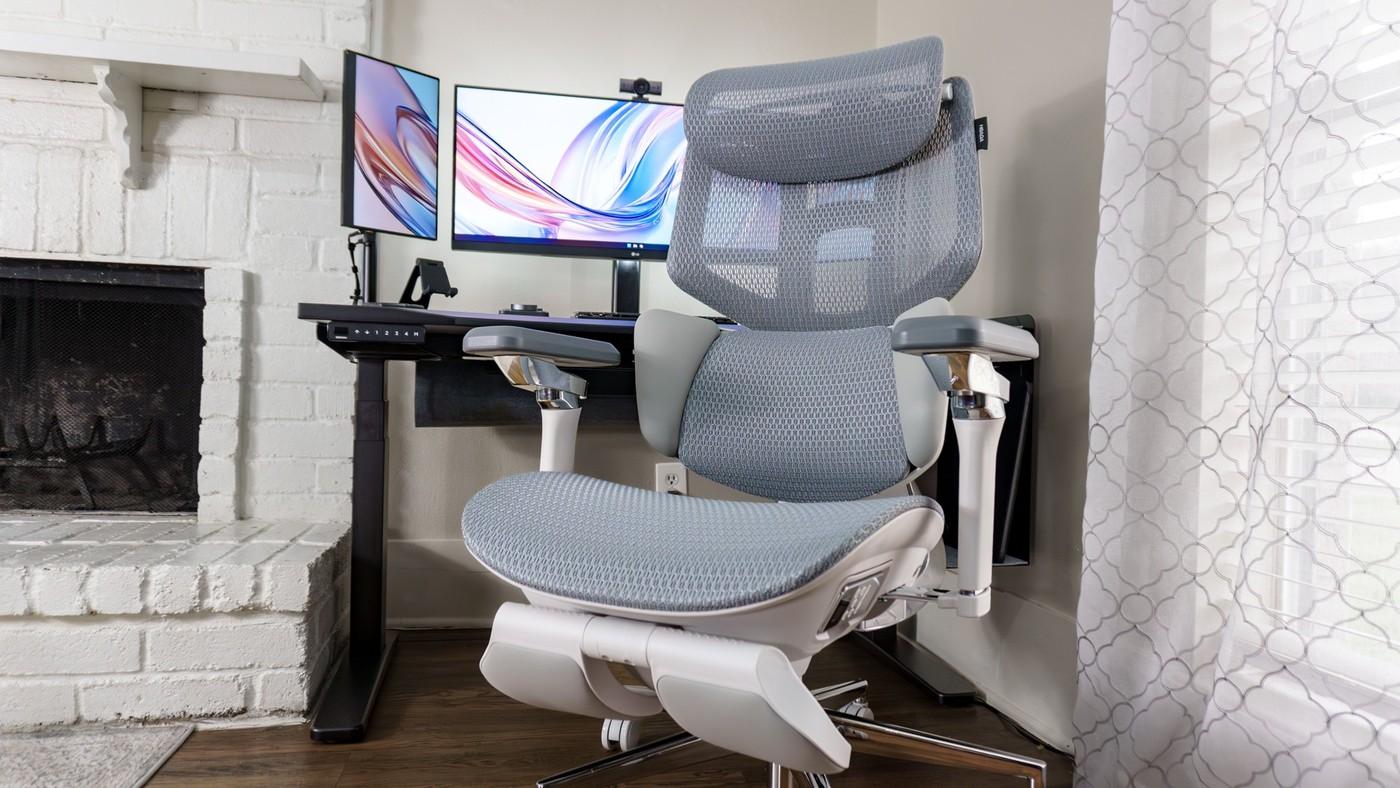
Tom's Guide's full Hbada X7 review describes lumbar tracking, heating, cooling and massage functions powered by a removable battery. The chair also includes mesh sections, a pullout footrest and extensively adjustable armrests.
Those additions make it heavier and more complex than a conventional task chair. Check how it will move on the office floor and how the battery is charged, then review the separate coverage for electronics and mechanical parts. Powered comfort features should be assessed as optional functions rather than a reason to extend the working day indefinitely.
Plan the removable battery routine
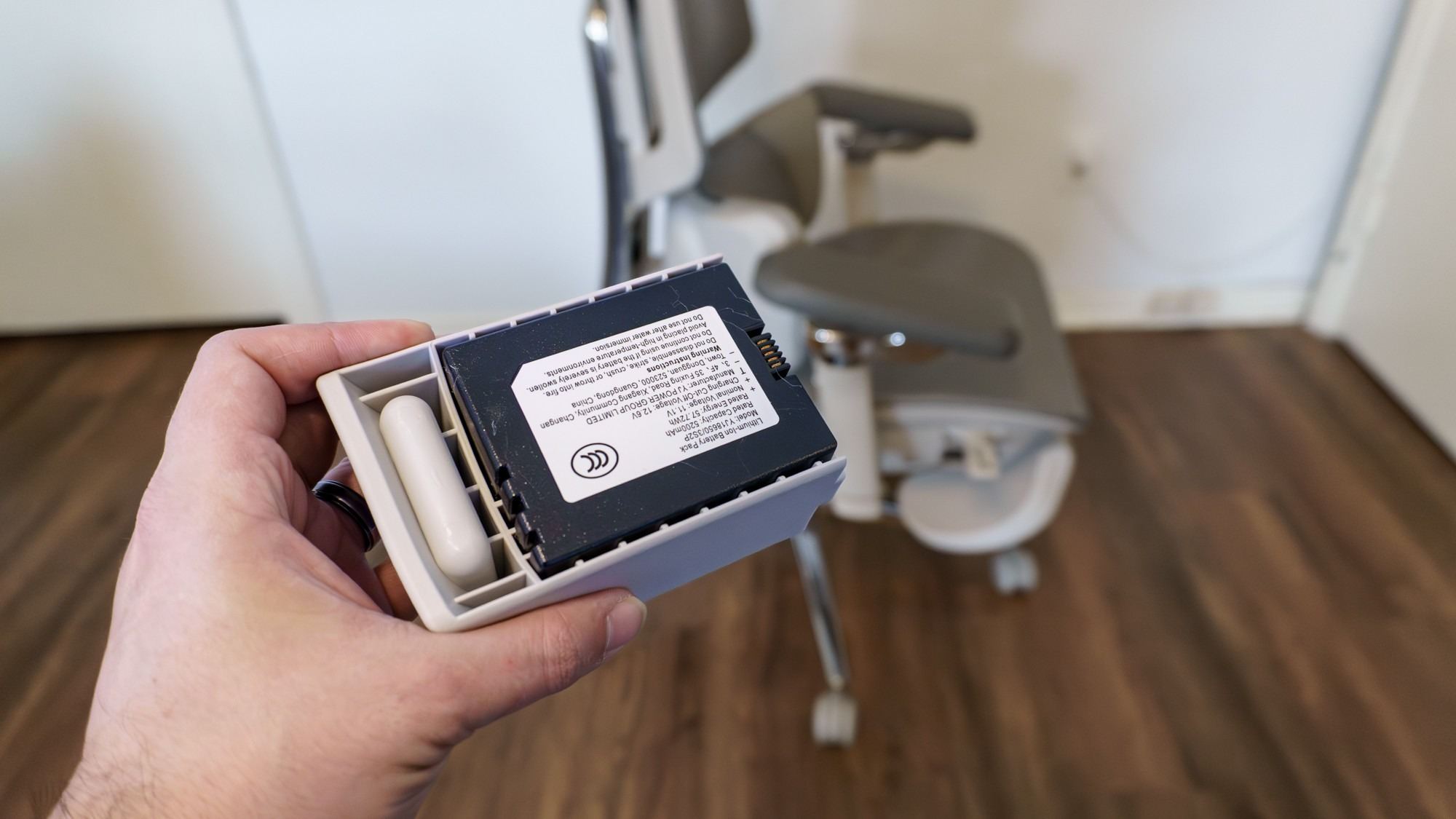
The source describes a 5,200mAh battery that slides into the right side of the seat and charges over USB-C. Using it avoids keeping the chair connected to a wall during movement. The wired remote is stored on the left and uses a retracting flat cable. Identify both locations before arranging nearby desk furniture so neither is trapped or pulled as the chair moves.
Keep the active and manual adjustments distinct
Automatic lumbar movement responds to changes in the user's position through sensors and motors. The remote also provides direct control and separate heating, ventilation and massage options. The reviewer liked the support even with the powered features disabled, which makes ordinary fit worth evaluating on its own. The source is an individual product test, not clinical evidence that the chair treats a back condition.
Allow for delivery and mechanical complexity
The review lists a 75-pound chair and an 83-pound shipping box, with a more involved assembly than some similarly priced alternatives. Consider stairs, doorways and assistance before delivery rather than assuming it moves like a light mesh task chair. Check the current written warranty for the frame, mechanical components and electronics, since coverage differs. Its powered features add maintenance and charging requirements alongside the many physical adjustment points.
Evaluate the ordinary chair fit before selecting a powered mode
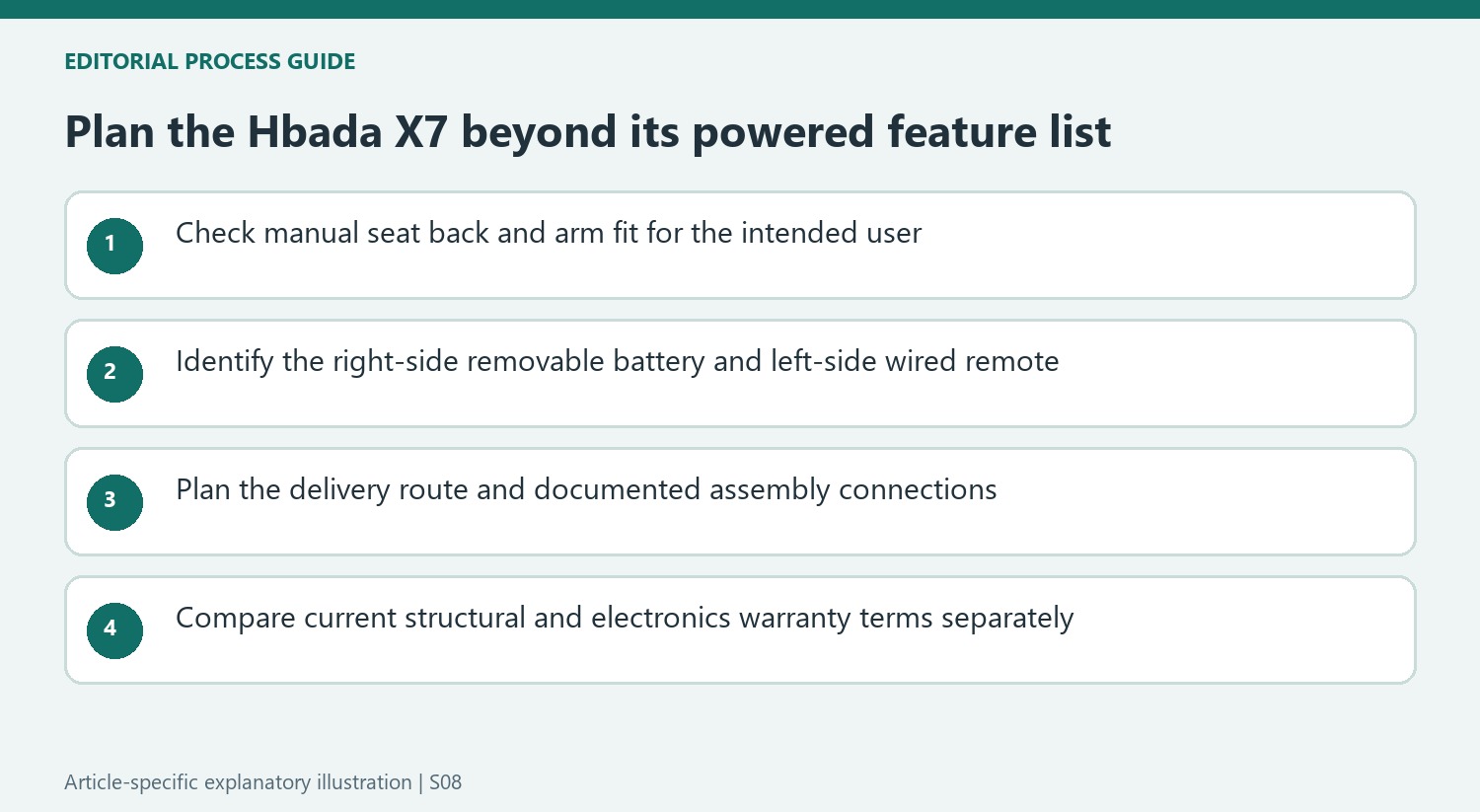
The reviewer used the X7 for two months and remained positive about support even with the electronic extras disabled. That is a useful reason to examine seat depth, arm position and backrest fit independently of heating or massage. The chair offers many adjustment points, but their presence does not prove the same fit for every body. Try the manual seating arrangement and compare the current dimensional and load limits with the intended user.
The automatic lumbar feature uses sensors and motors to respond to position changes, while the remote also permits direct control. Treat that as an optional operating mode rather than clinical evidence about treating an injury or chronic back condition. The reviewer's comfort account is an individual experience. Powered support and massage do not remove the value of movement, ordinary breaks or selecting furniture that fits without requiring a particular automatic behavior.
Give the removable battery a defined charging routine
The 5,200mAh battery slides into the right side of the seat and recharges through USB-C. That can avoid a wall lead tethering a chair while it moves, but it introduces another device that needs a regular charging location. Check the current input and handling instructions, then choose a supported place for replenishment. A battery-powered chair does not eliminate the supply cable; it changes when and where the cable is connected.
The built-in remote is on the left and uses a retracting flat lead rather than being wireless. Keep its path and storage area clear of neighboring furniture during recline and movement. The battery location and remote location are different service points, so identify both before positioning the chair tightly between drawers or other equipment. The screen and controls can be convenient only when the user can reach them without trapping or pulling the attached wiring.
Plan delivery and maintenance around the extra hardware
The reviewed chair weighed seventy-five pounds and arrived in an eighty-three-pound box. Consider the route through doors and any stairs before delivery, including appropriate assistance for the actual package. The assembly required more work than some similarly priced alternatives, including connecting the seat and backrest wiring with limited clearance. Follow the supplied process and avoid pinching that connection rather than assuming a premium price means the chair arrives ready to roll.
The review distinguishes five-year coverage for specified load-bearing structures from three-year coverage for other parts and electronics. Read the current written warranty for the actual purchase rather than simplifying it into one term for everything. Heat, ventilation, massage and motorized adjustment add maintenance decisions alongside the mechanical chair. Compare the present price with the likelihood of using those functions, keeping the two-month positive test distinct from evidence of many years of electronic reliability.
References
- I tested a smart office chair that takes the guesswork out of ergonomics but it doesn’t come cheap. Tom's Guide; Anthony Spadafora.


Bir Cevap Yaz
E-posta adresiniz yayınlanmayacak. Gerekli alanlar * ile işaretlenmişlerdir.