
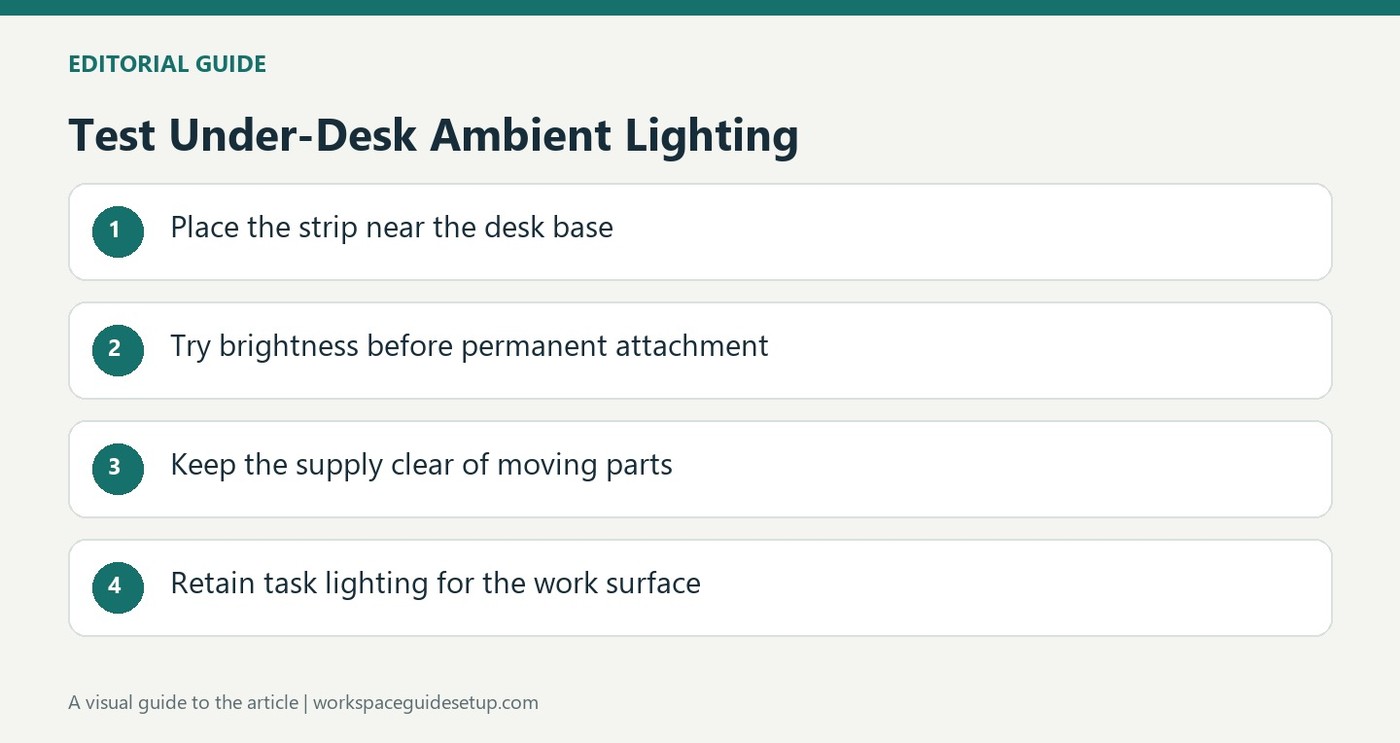
Ideal Home shares designer Gabrielle Omar's suggestion of placing light near a desk's base to create a floating effect and emphasize visible floor space. The article also recommends trying the brightness before permanently attaching LED strips.
This is an ambient design choice rather than a replacement for task lighting. Keep strips and leads compatible with the furniture and away from moving parts. A separate light used only during work can also become a simple visual signal that the workstation is active or closed for the day.
Try the effect before attaching the strip
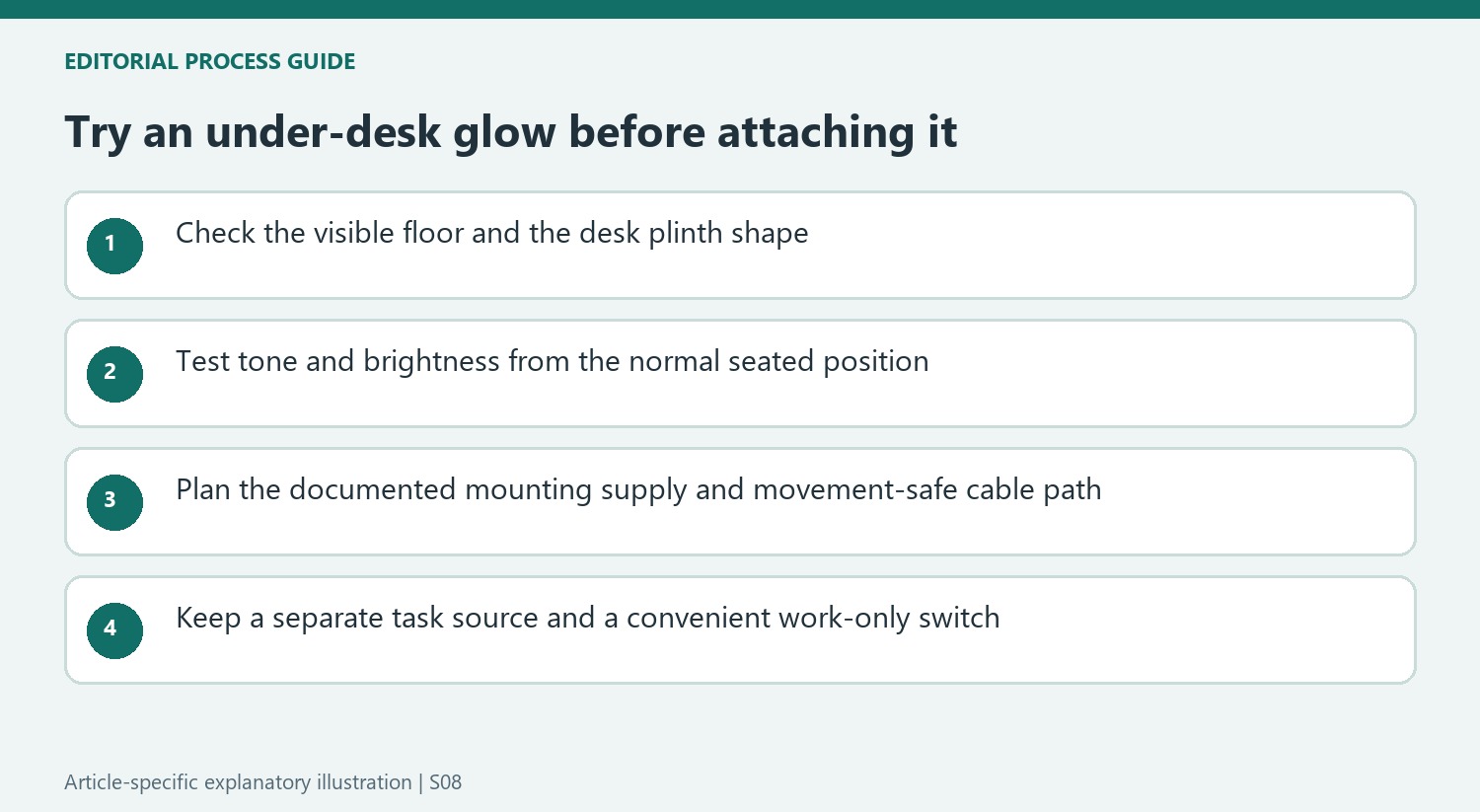
The designer's suggestion places light near the desk's plinth so the floor beneath it appears more open. The source recommends switching the strip on and varying its brightness before committing to the mounting position. That trial matters because the effect depends on the desk shape, visible floor and surrounding surfaces. Keep the lead route and the fixture's installation instructions part of the test.
Choose a work signal that can be switched off
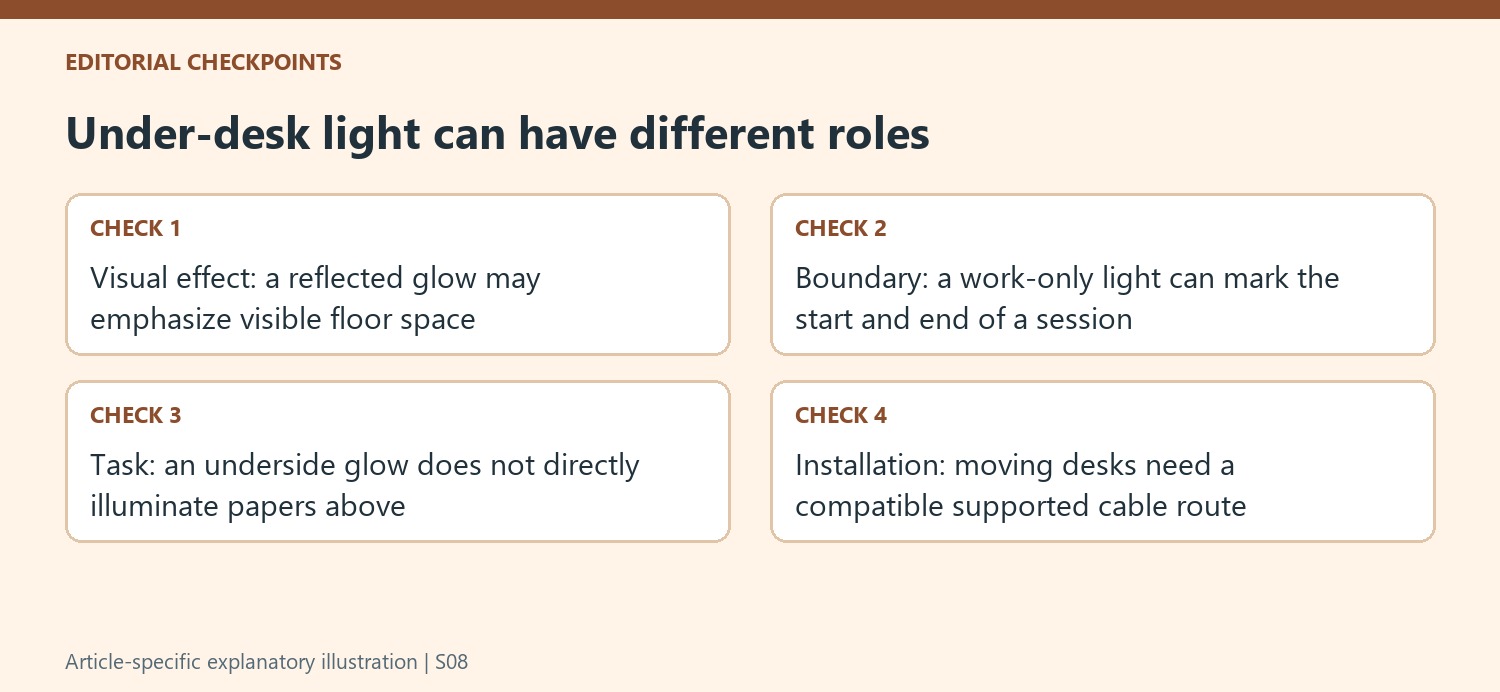
Omar also recommends a light used only during working time. In a living room or another shared area, turning it off helps mark the end of the work session without rebuilding the furniture arrangement. This is a visual boundary, rather than a measured guarantee of improved productivity. Place the control somewhere convenient enough that the daily routine remains easy to follow.
Retain a separate light for the task
An under-desk glow emphasizes space and atmosphere; it does not directly illuminate papers or keys above the surface. The article's warm-versus-cool choice concerns the impression created in the room. Keep a suitable task source for close work and examine screen reflections separately. If the desk changes height, any attached strip and supply lead also need enough safe movement without catching in the frame.
Test the visual effect against the actual desk shape
The designer's suggestion uses light near the plinth to draw attention toward the floor and create a floating impression. That depends on what can actually be seen below the furniture. A solid panel, nearby storage or a dark floor may change the result compared with an open desk. Try the light in the proposed position before treating the idea as a guaranteed way to make the room appear larger.
The feature specifically recommends switching the strip on and experimenting with brightness before attaching it. Use that trial to check the reflected glow, visible individual light points and normal seated sightline. A strip that looks pleasant while standing across the room may be distracting from the chair. Choose the tone and level around the existing surroundings rather than assuming the brightest effect creates the most convincing visual space.
Keep the attachment and cable route appropriate to the furniture
Check the selected strip's power, mounting and surface instructions before fitting it to a desk. The feature is a design idea, not a complete installation procedure for every LED product. Identify where the supply and controls will sit, leaving a supported route clear of working feet and moving hardware. Do not make the light's lead carry the strip's weight or rely on an attachment unsuitable for the furniture finish.
A height-adjustable desk introduces another position change to inspect. Follow the desk and lighting instructions and retain enough slack through the actual travel, without allowing the cable to catch in the frame. The under-surface placement should remain serviceable if the strip or supply must be removed. A clean visual line is useful only when the installed lighting can move and be maintained without pulling on its connections.
Use the work-only signal alongside proper task illumination
The source's second idea is a light used only during work, especially where the office shares a living space. Turning it off marks the end of the session without moving the whole desk. Place the switch where that routine is convenient and explain the signal to other people sharing the room if needed. This is a practical visual boundary, not a measured promise that the light alone improves productivity or makes switching off mentally automatic.
The glow beneath the desk does not directly light the keyboard or a paper task above it. Keep an appropriate work-surface light and assess screen reflections separately. Warm or cooler tones can change the room's impression, but they do not replace brightness and direction at the task. The strongest use of the designer's suggestion joins a modest ambient effect with a clear daily control routine, leaving the working illumination and furniture movement requirements intact.
References
- Interior designer reveals a secret to making your home office feel bigger on a budget. Ideal Home; Millie Hurst.


Bir Cevap Yaz
E-posta adresiniz yayınlanmayacak. Gerekli alanlar * ile işaretlenmişlerdir.