
Measure before buying materials
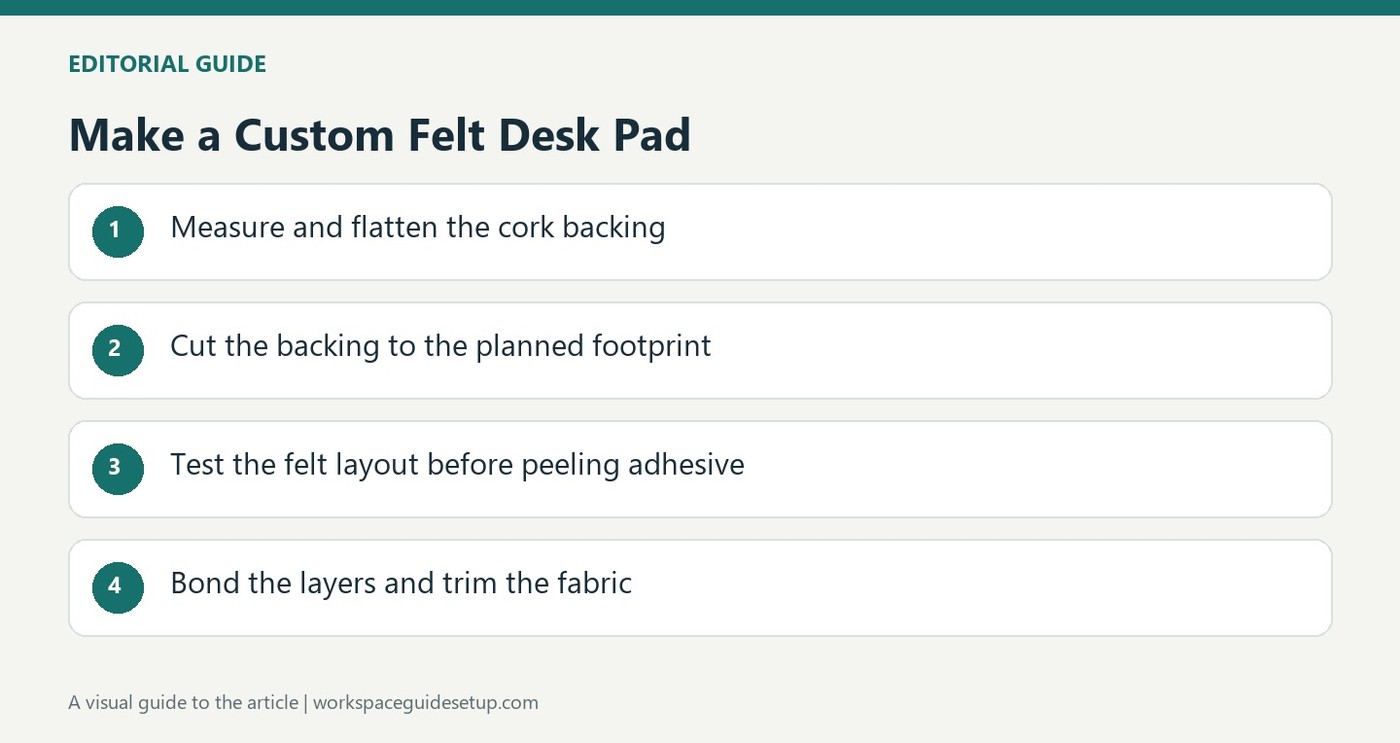
A custom desk pad can address an awkward gap between standard retail sizes. How To Geek's felt pad project starts by measuring the space and deciding how much of the keyboard and mouse area should be covered. Buy cork backing and felt slightly larger than the planned footprint, then cut the backing to the intended rectangle. The article uses adhesive backed cork to simplify attaching the upper fabric layer.
Check the layout before bonding
Flatten rolled cork before cutting, and use appropriate cutting tools with a straight edge to keep the dimensions controlled. Rounded corners are optional. Before removing the adhesive liner, lay out the felt and decide which portion of the fabric should appear on the finished surface. After bonding the layers, trim the felt around the cork backing. The guide favors wool blend felt over inexpensive acrylic for this project. A custom size solves a fit problem, but the final surface still needs to suit the mouse, writing habits and maintenance expectations of its user.
Treat optional finishing steps as separate decisions
The source suggests testing any fabric-protection treatment on a scrap first to check for discoloration. Vinyl decoration is also optional and can be applied after the basic felt-and-cork pad is finished. Neither step is necessary to obtain the custom footprint. Keep cutting tools on an appropriate protected surface and follow the adhesive and treatment instructions for the actual materials selected. The author's preference for wool blend reflects concerns about acrylic pilling under mouse movement, but it should not be read as a promise that every wool surface is stain-proof. Test mouse tracking and writing feel on a sample before committing to a large final pad.
Choose the custom dimensions from the actual working pattern
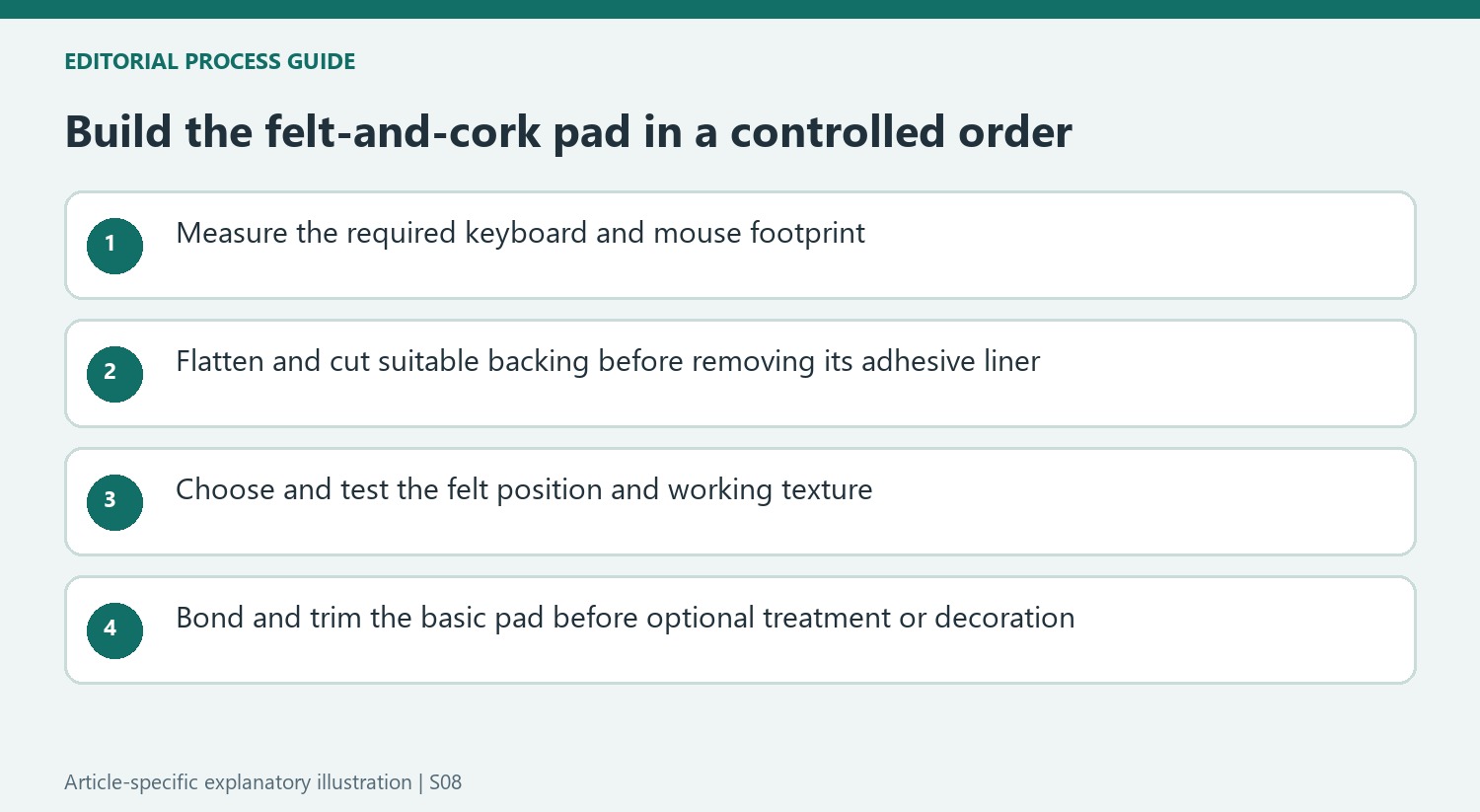
The project began because attractive ready-made pads were expensive or awkwardly sized for the author's desk. A custom rectangle can address that fit problem, but its dimensions still need a clear purpose. Mark the keyboard and mouse area and leave room for the monitor base and other objects. Buy the felt and cork somewhat larger than the planned footprint so the final cut is controlled rather than constrained by an undersized piece.
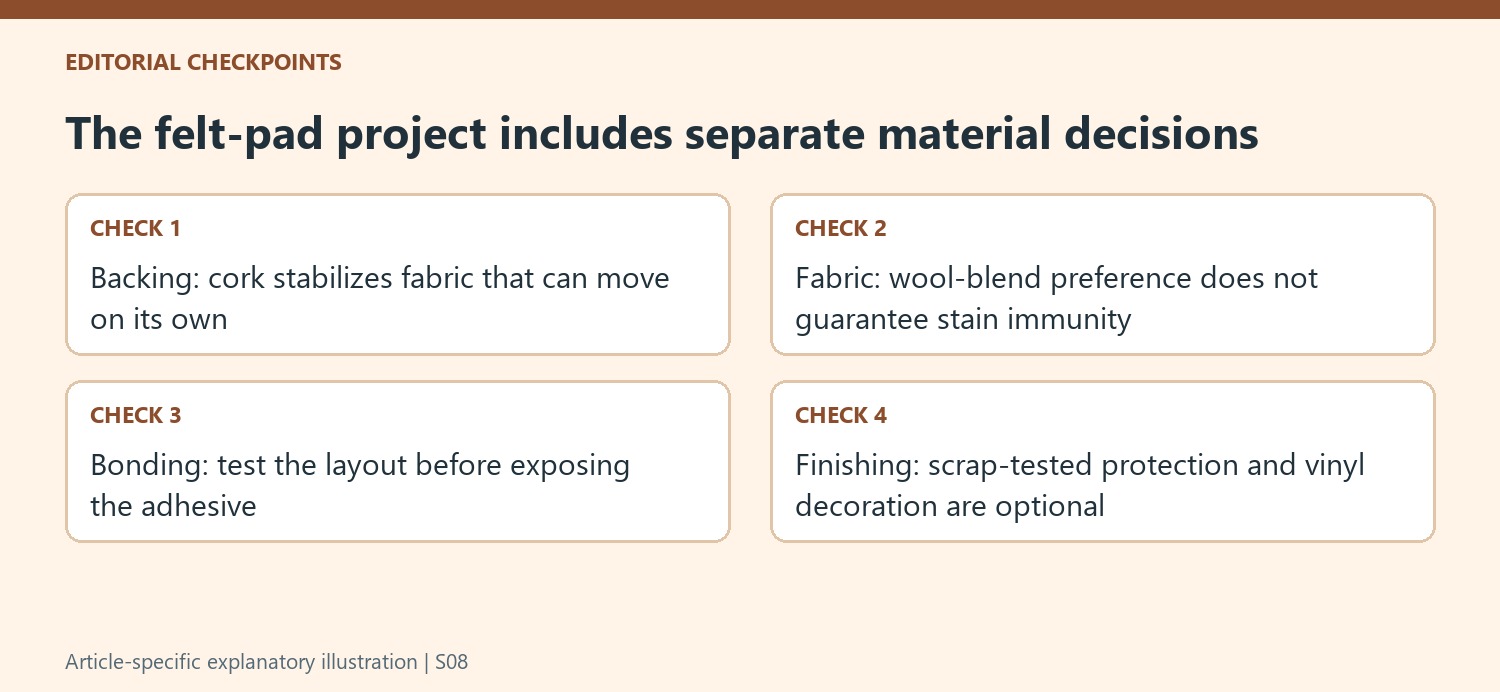
The author uses cork to stabilize felt that would otherwise move too freely on its own. Adhesive-backed cork simplifies joining the layers, while rolled material needs flattening before measurement and cutting. Follow the selected adhesive and material instructions instead of assuming every cork roll behaves identically. The project describes one construction method rather than establishing that any combination of fabric and backing will produce the same grip or durability.
Check fabric appearance and working feel before bonding
The source prefers wool-blend felt because of concerns about acrylic pilling under repeated mouse movement. Keep that preference distinct from a guarantee that every wool fabric resists stains or wear. Test a sample with the actual mouse and any writing task before committing to a large finished pad. A soft attractive fabric can still be too yielding for a pen on a single sheet or have a texture the user dislikes.
After cutting the cork to size, lay the felt over it without removing the adhesive liner. This is the opportunity to select the visible section and orientation of the fabric. Rounded corners are optional, and the source uses a curved template to mark them. Work on an appropriate protected surface with suitable cutting tools, keeping the planned dimensions and the tool instructions clear rather than rushing directly from measurement to an irreversible bond.
Finish the basic pad before deciding on decoration
Once the chosen felt position is established, attach it to the backing as directed and trim the fabric around the cork outline. At that point the custom footprint is complete. The optional fabric-protection step needs its own suitability check on a scrap because the treatment can affect appearance. Follow the actual product instructions and allow any required drying; the source's suggestion should not be treated as a universal treatment for every fabric.
Vinyl decoration is another optional addition, whether cut with a craft machine or obtained as a prepared design. It does not determine whether the basic felt-and-cork mat fits the desk. The author used an open area between a split keyboard for a design, illustrating that decoration can follow the actual equipment arrangement. Keep the finished mouse route clear and check the pad lies flat. The successful result is a stable custom-sized surface suited to daily use, with decorative and protective choices assessed separately.
References
- Everything You Need to Make Your Own Fancy Felt Desk Pad. How-To Geek; Josh Hendrickson.


Bir Cevap Yaz
E-posta adresiniz yayınlanmayacak. Gerekli alanlar * ile işaretlenmişlerdir.