
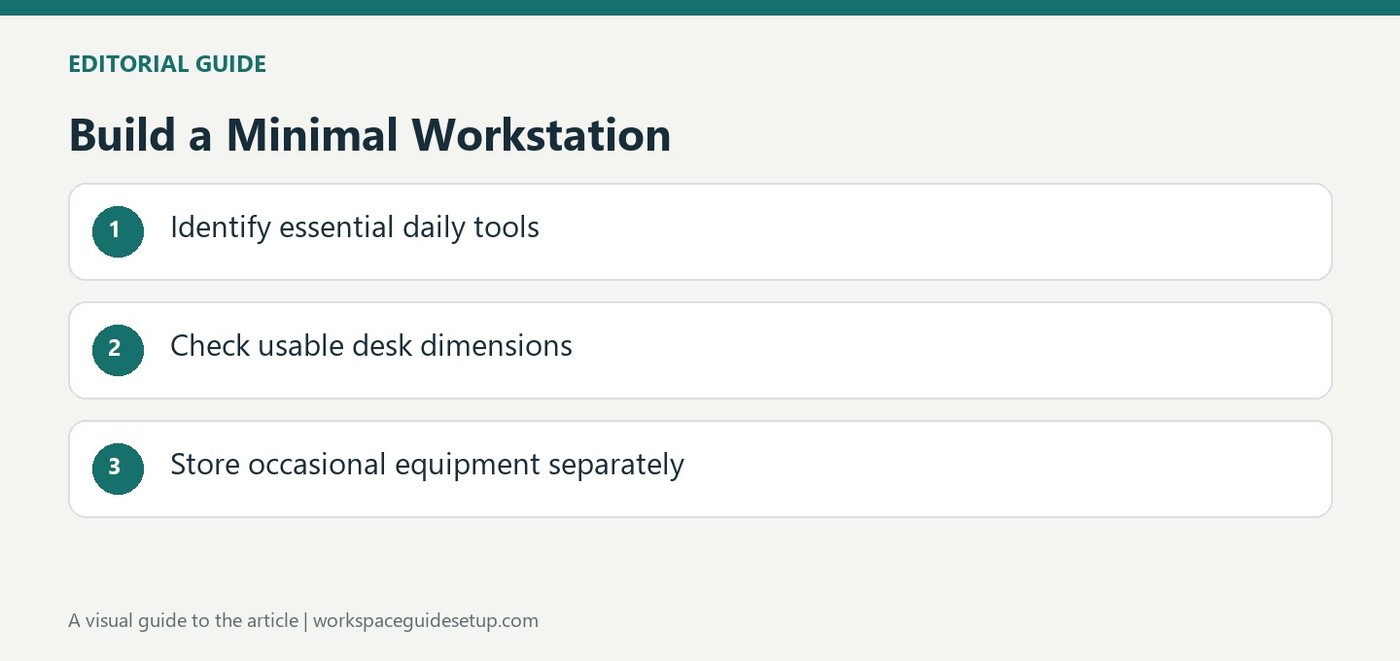
Haworth's restrained desk review illustrates a simple laptop and reading arrangement with carefully chosen optional cable storage.
Start with a focused surface
TechRadar describes using the Upside for laptop work, reading, writing and an iPad rather than building a densely equipped gaming station. The reviewed desk has a laminate top and a sturdy base, with C-shaped legs that leave a relatively open area underneath. The clean appearance comes from this restrained arrangement as much as from the furniture finish. It remains a substantial, heavy desk that needs an appropriate place in the room.
Choose the controls deliberately
The standard paddle moves the desk up or down without the direct preset-button experience available on many alternatives. An upgraded paddle adds features, and optional clips and a wire tray can help with the cables. Those choices change the finished setup and cost. Plan the actual computer and storage first, then decide whether a spare single-screen arrangement and this style of height control suit everyday work.
Choose adjustments before choosing decorative extras
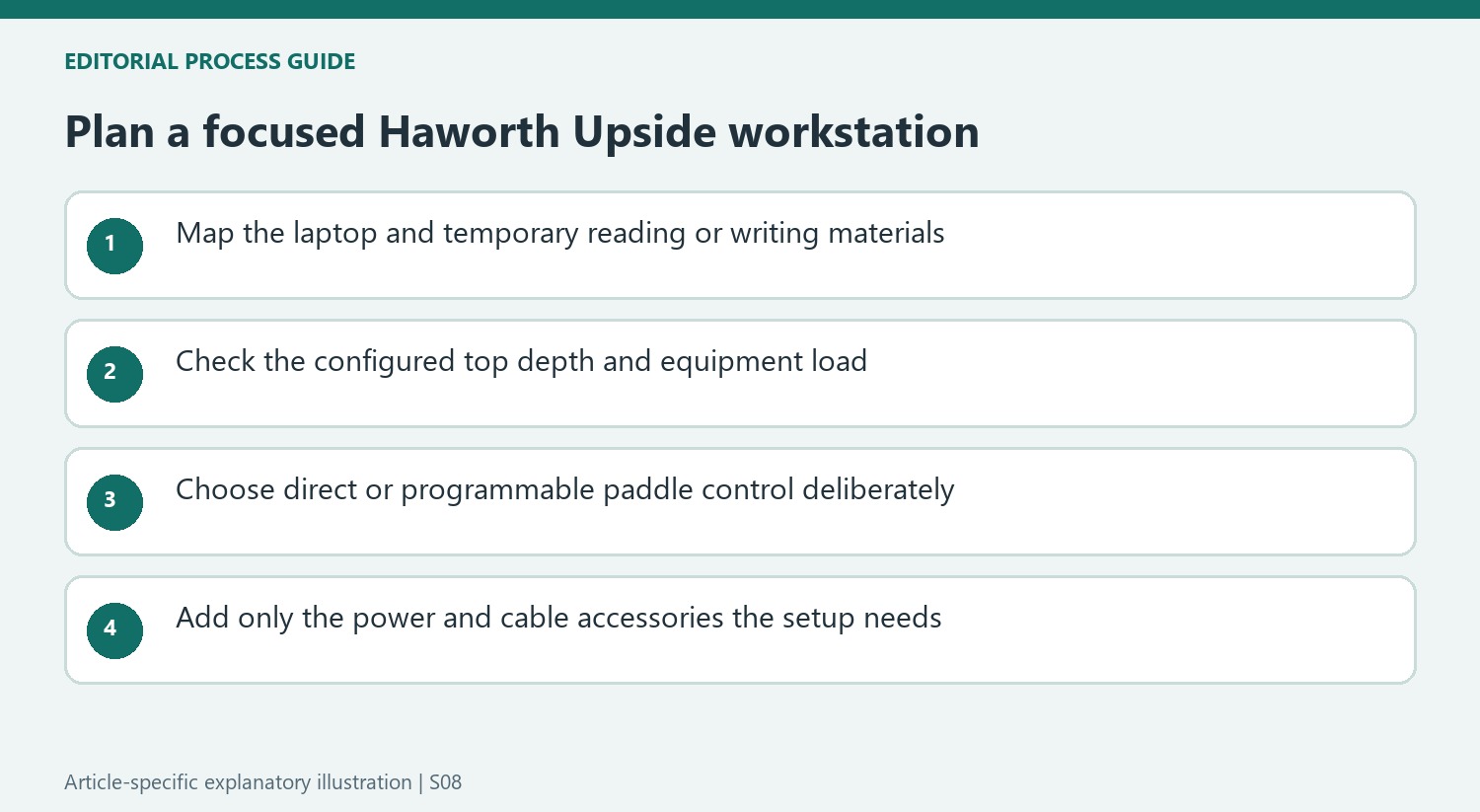
The tested configuration has a 23-by-58-inch top, a stated 150-pound capacity and a 22.6-to-48.7-inch height range. Those measurements are more useful for fit than its minimalist appearance alone. The review also describes a programmable paddle option with a height display and movement reminders, while the basic paddle simply changes height under direct control. Decide which interaction is needed each day before spending on finish choices or accessory furniture. The writer paired the desk with a separate adjustable table that could act as a side surface, riser or footrest. That versatility may be helpful, but it should not be mistaken for storage or functions included with the desk itself.
Use the review tasks to judge the top dimensions
The writer's laptop work, reading, sketching and project planning are relevant because they explain what the spare surface actually supported. These tasks often need an area for temporary materials rather than a permanent collection of screens and peripherals. Map the intended computer and the largest open book or notebook onto the reported depth. A broad but relatively shallow top can work well for that arrangement while leaving different constraints for a large monitor base.
The reviewer deliberately avoided building a particularly complex station on this desk. That is a description of his preference and tested use, not proof that the furniture cannot support any other setup. Compare proposed equipment with the current load and mounting specifications. Keep the distinction between a deliberately simple arrangement and missing capabilities, so the clean look does not become either an unsupported limitation or a reason to ignore practical needs.
Choose the controller interaction before ordering
The standard paddle is direct: hold it in the desired direction while the desk moves. The source found that intuitive after ordinary use but missed the separate preset-button style of other desks. Someone who changes position often or shares a workstation may value a different interaction. Confirm the current basic and programmable options rather than treating a paddle shape as evidence that all versions have identical memory and display features.
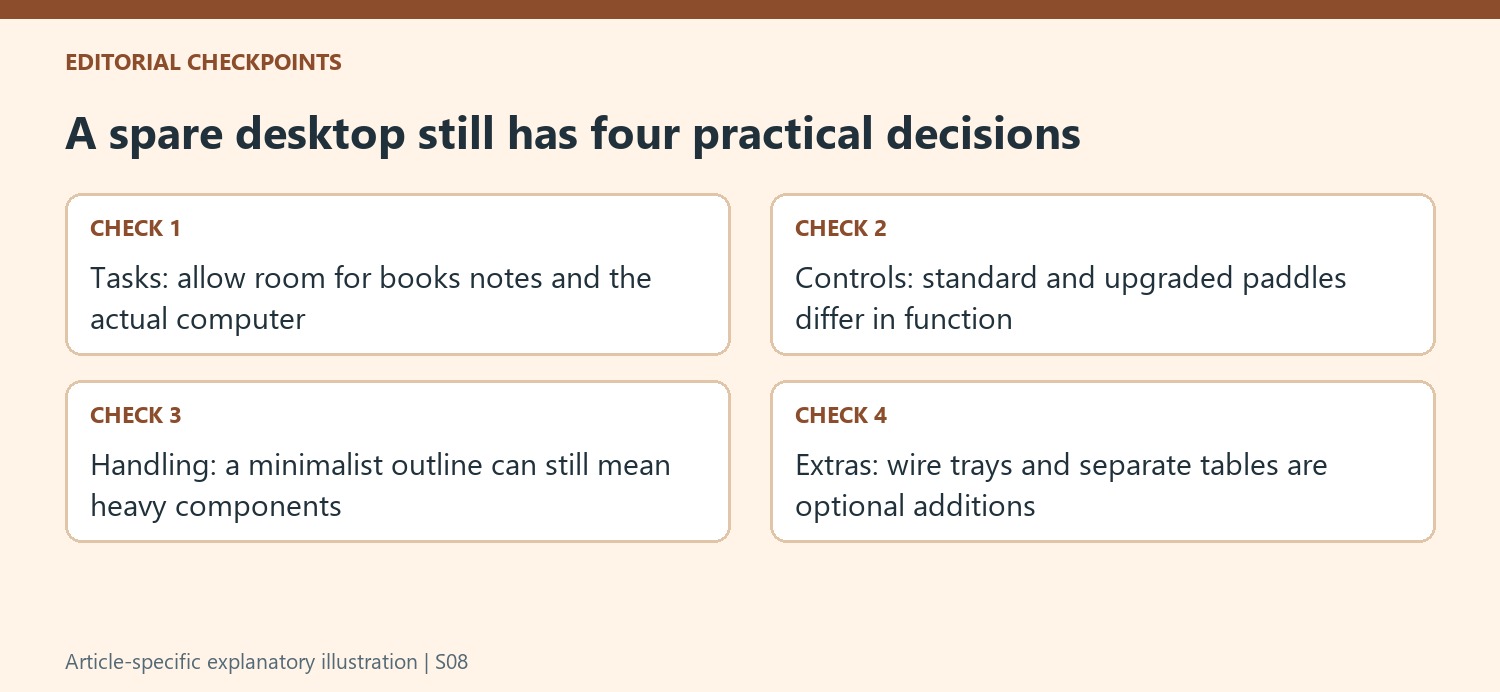
The upgraded option is described as adding a height display and movement reminders. Those can be useful prompts, but they are separate from the user's actual fit and preferred work pattern. Select sitting and standing positions using the whole arrangement, including chair, input devices and screen. A reminder that encourages movement does not establish which height is appropriate or remove the need to test the position before using it for a long session.
Account for weight and optional organization in a restrained room
The substantial weight deserves planning before assembly even though the experienced reviewer managed his unit alone. Follow current handling instructions and arrange suitable assistance where needed; a minimalist outline does not mean lightweight components. The C-shaped base may look less bulky against a wall, but actual chair and leg clearance still depends on where the user sits and what else occupies the area underneath.
Optional power modules, cable clips and a wire tray can change both cost and the finished appearance. List the necessary connections before choosing those additions, then check what is included in the selected configuration. The separate multifunction table described by the writer is another purchase with its own role, not a built-in extension. The strongest version of the simple layout keeps only useful additions while giving loose supplies and wiring a realistic place to go.


Bir Cevap Yaz
E-posta adresiniz yayınlanmayacak. Gerekli alanlar * ile işaretlenmişlerdir.