
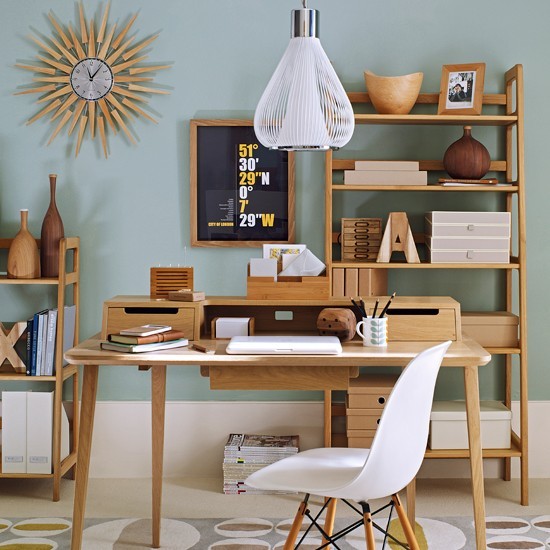
Ideal Home's mid-century office scheme pairs warm wooden furniture with cooler wall colors and simple accessories. Its suggested freestanding desk arrangement uses a geometric rug to define the work area when the room has enough space.
A streamlined desk with shelves or drawers provides practical storage without abandoning the look. The article also suggests keeping major timber pieces in a similar tonal range while using smaller wooden accessories for variation. Preserve chair clearance before adopting a central position that looks appealing in a photograph.
Set the main wood tone before choosing accents
Ideal Home recommends keeping the largest wooden pieces in a similar mid-tone range. Smaller accessories can then introduce lighter and darker wood without making every piece compete for attention. This is a practical way to combine existing furniture with new items: start with the desk and storage, then decide whether a notebook holder or organizer needs to match exactly.
Balance warm furniture with a cooler wall
The illustrated scheme uses a muted duck-egg wall color to contrast with the timber. The source presents this as a way to make the grain more noticeable while keeping the room calm. Try the color alongside the actual desk finish and available daylight before applying it throughout the room. A photograph cannot show how the same paint will appear in every home.
Give lighting and shelves a clear role
Rounded shelving and clean furniture lines carry the period-inspired look beyond the desktop. The article also places a pendant over the desk to illuminate and emphasize that area. Where a central desk or low pendant would obstruct movement, retain the material palette and streamlined storage instead. The scheme depends on relationships between furniture, light and color, rather than requiring every pictured item or retailer.
Begin with the pieces that determine the whole scheme
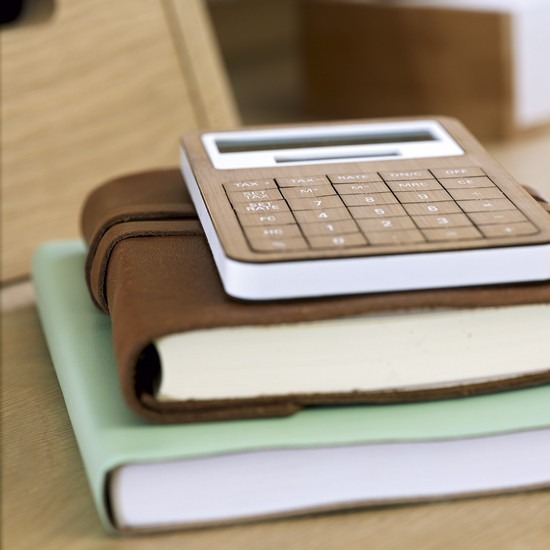
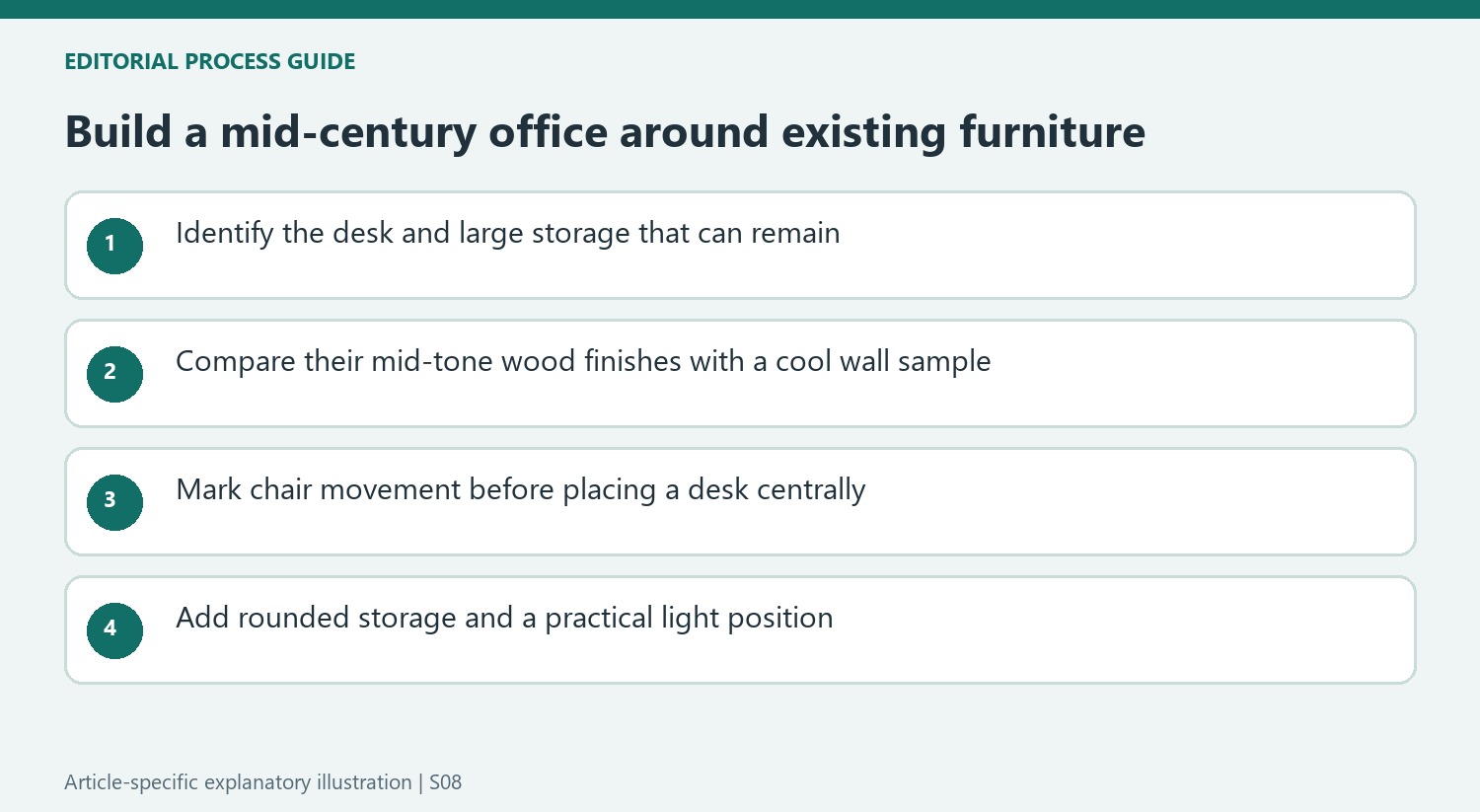
The scheme starts with an important budget distinction: an original mid-century collectible is not required to achieve the illustrated effect. The feature points readers toward secondhand sources but also allows warm wooden furniture and lighter accessories from ordinary retailers. Identify which existing large pieces could remain before searching for an exact reproduction of the photographed room. The desk and substantial storage will establish much more of the visual field than a small journal or calculator.
Keep that hierarchy when combining timber. Similar mid-tone finishes on the largest pieces can give the room a common base, leaving smaller objects to introduce variation. This is different from buying every accessory in an identical finish. Lay out the actual samples together where possible, including any existing floor finish, and check whether their undertones work beside the intended cooler wall color before committing to additional furniture.
Test a central desk against the room in use
Ideal Home explicitly makes the freestanding desk conditional on having enough room. A geometric rug can identify that zone visually, but it does not create the space needed for a chair to move or for someone to pass behind it. Mark the proposed desk outline and normal chair position before moving heavy furniture. Include access to drawers and shelving, rather than judging the plan only while the chair is tucked in.
A central desk also exposes connections that can disappear behind furniture against a wall. Include the computer, task light and their supply route when deciding whether the position suits everyday work. The source focuses on appearance and furnishings rather than providing an electrical installation plan. If a safe, practical route is unavailable, use its wood, color and storage ideas with a different desk position instead of forcing the photographed layout into the room.
Give the period details a practical purpose
The rounded shelving unit carries the same clean-lined character as the desk while keeping frequently used objects accessible. Consider what will occupy those shelves before choosing them solely for their silhouette. A few wooden accessories can repeat the material palette without replacing all the supplies already owned. The feature's shopping references illustrate the approach; they are not a requirement to obtain the same named products or a statement about current availability.
The low pendant in the example draws attention to the work area as well as illuminating it. Assess its relationship to head clearance, screen position and the actual room before adopting that detail. The muted blue wall is likewise a starting point for a sample rather than a guaranteed result under different daylight. Treat the room as a coordinated working arrangement of surface, storage and light, with the mid-century elements selected to support that arrangement.
References
- How to create a mid-century modern home office. Ideal Home; Holly Walsh.


Bir Cevap Yaz
E-posta adresiniz yayınlanmayacak. Gerekli alanlar * ile işaretlenmişlerdir.