

Expert decluttering advice recommends beginning with one manageable area and leaving only frequently used essentials within immediate reach.
Start with the desktop or one drawer
Tom's Guide's home-office article suggests choosing a limited zone instead of attempting to reorganize the entire room. A short timed session can make the first step feel more achievable. The expert advice then focuses on keeping a laptop, a basic notebook and a pen in defined positions while putting less relevant objects away.
Use storage to support the arrangement
Drawer dividers, cable tidies and desktop risers are presented as ways to keep the workspace functional without covering every surface. The guide also points out that floor clutter contributes to the overall feeling of disorder, so boxes and unused equipment should not simply be moved beneath the desk. The practical aim is a layout that makes common tasks straightforward and makes the next tidy-up easier, rather than a perfect-looking photograph that cannot be maintained.
End the workday with a repeatable reset
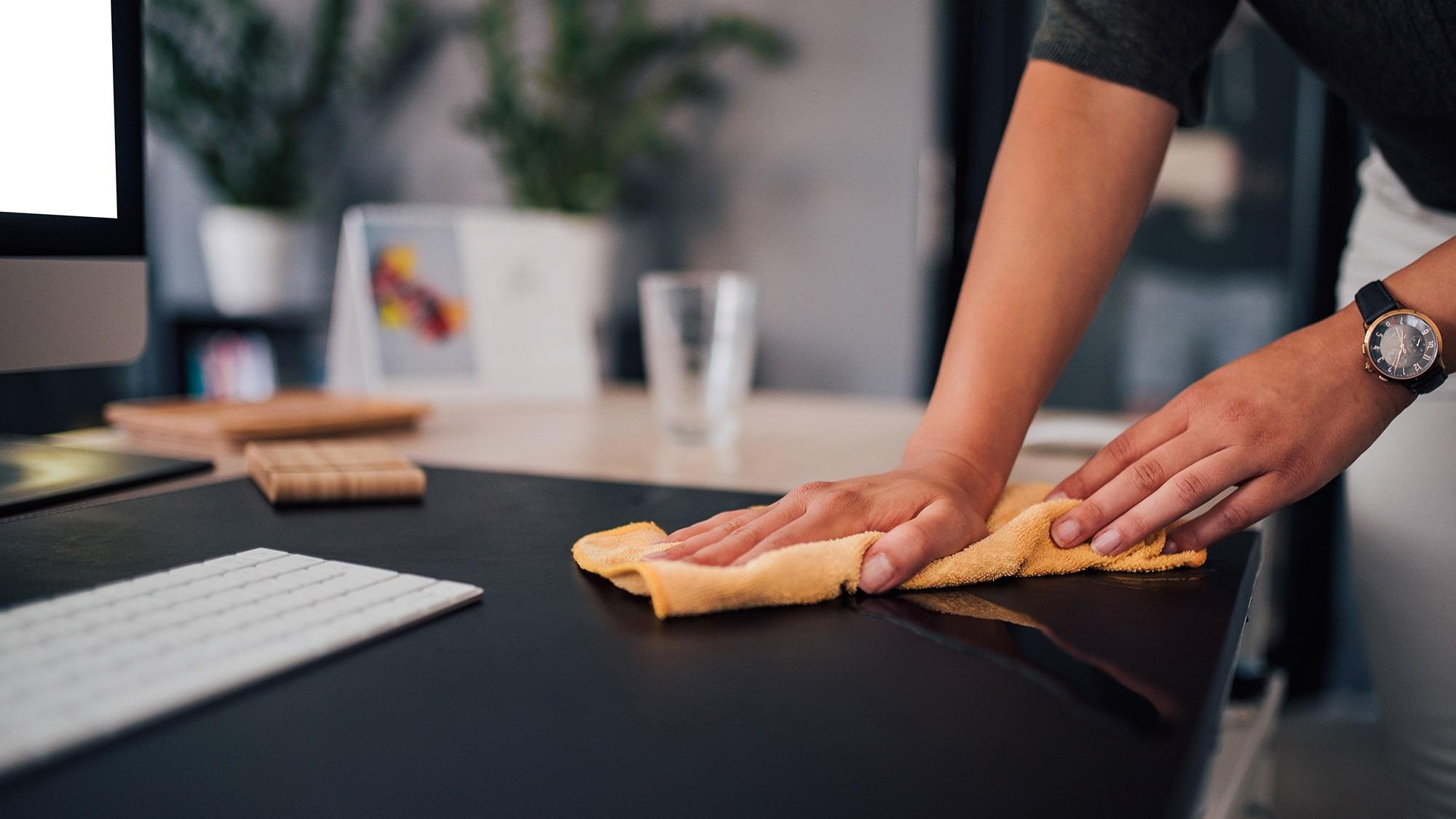
The experts quoted by Tom's Guide suggest a five-minute tidy as part of shutting down work. Closed boxes, drawers or baskets give loose objects somewhere to go during that short routine. A desk lamp can provide an additional signal when it is switched off at the end of the day. The article also allows one or two meaningful personal objects, rather than requiring a completely bare office. Choose those deliberately and keep the rest of the surface available for work. This makes the maintenance task concrete: return supplies to their places, remove objects that belong elsewhere and leave the active zone ready for the next session.
Make the first session small enough to finish
The suggested ten-minute start works best when its boundary is clear. Choose the active keyboard area, a single drawer or the visible cable cluster, rather than pulling the contents of the entire office into one pile. The source offers these as examples of achievable first zones. Decide where displaced objects belong before the session ends so that clearing one surface does not simply transfer the same problem onto the chair or floor.
For the active desktop, distinguish objects needed for the present task from supplies that are merely useful sometimes. The article's laptop, notebook and pen example is a deliberately modest starting set, not a rule that every worker must use exactly three items. A drawing task may require different tools. The useful test is whether the objects that remain have a defined role and whether the rest can be retrieved without rebuilding the whole desk.
Use the right storage for the particular kind of clutter
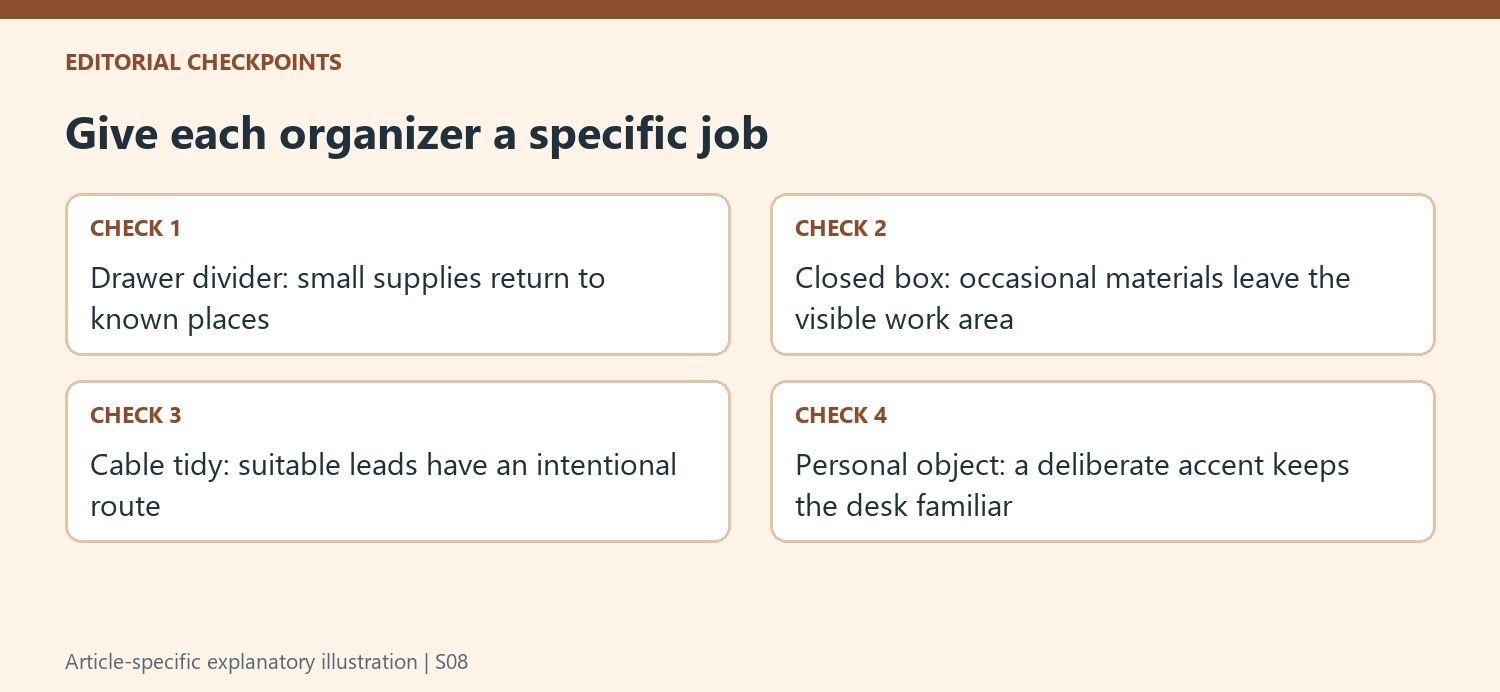
The feature discusses closed boxes, drawers and baskets as ways to reduce the number of visible objects, while cable tidies address a different problem. A drawer divider gives small supplies repeatable positions; a cable tray gathers suitable leads and adapters. These are complementary functions. Hiding loose papers in a cable area, or pushing spare equipment beneath the desk, would miss the article's emphasis on keeping the wider workspace manageable as well as the top.
Wall storage can help when the desktop is crowded, but frequently used items still need convenient access. The pegboard example includes shelves, containers and hooks, showing how one surface can support different supplies. Start with the items that actually need those holders. Buying a large collection of organizers before sorting the contents can leave the room with more objects to maintain and no clearer distinction between working tools and things stored for later.
Keep the emotional advice in proportion
The article connects clutter with attention and stress through comments from a psychologist and an interiors expert, and cites a survey commissioned by a flooring retailer. Those statements explain why people may value a calmer environment. They do not establish a medical outcome from purchasing a particular basket, carpet or desk accessory. Treat the suggested changes as practical experiments in making the workspace easier to use, rather than a guaranteed treatment for stress or fatigue.
Personal objects remain part of that experiment. One or two carefully selected pieces can make the station feel familiar without filling the active working area. At shutdown, return supplies to their assigned places and remove items belonging elsewhere before switching off the lamp. If the five-minute reset regularly fails, review whether the storage locations are too crowded or inconvenient. The aim is a routine that can survive a busy week, with the arrangement adjusted when its maintenance proves unrealistic.
References
- 5 expert tips on how to declutter your home office — reduce stress and boost your focus. Tom's Guide; Camilla Sharman.


Bir Cevap Yaz
E-posta adresiniz yayınlanmayacak. Gerekli alanlar * ile işaretlenmişlerdir.