
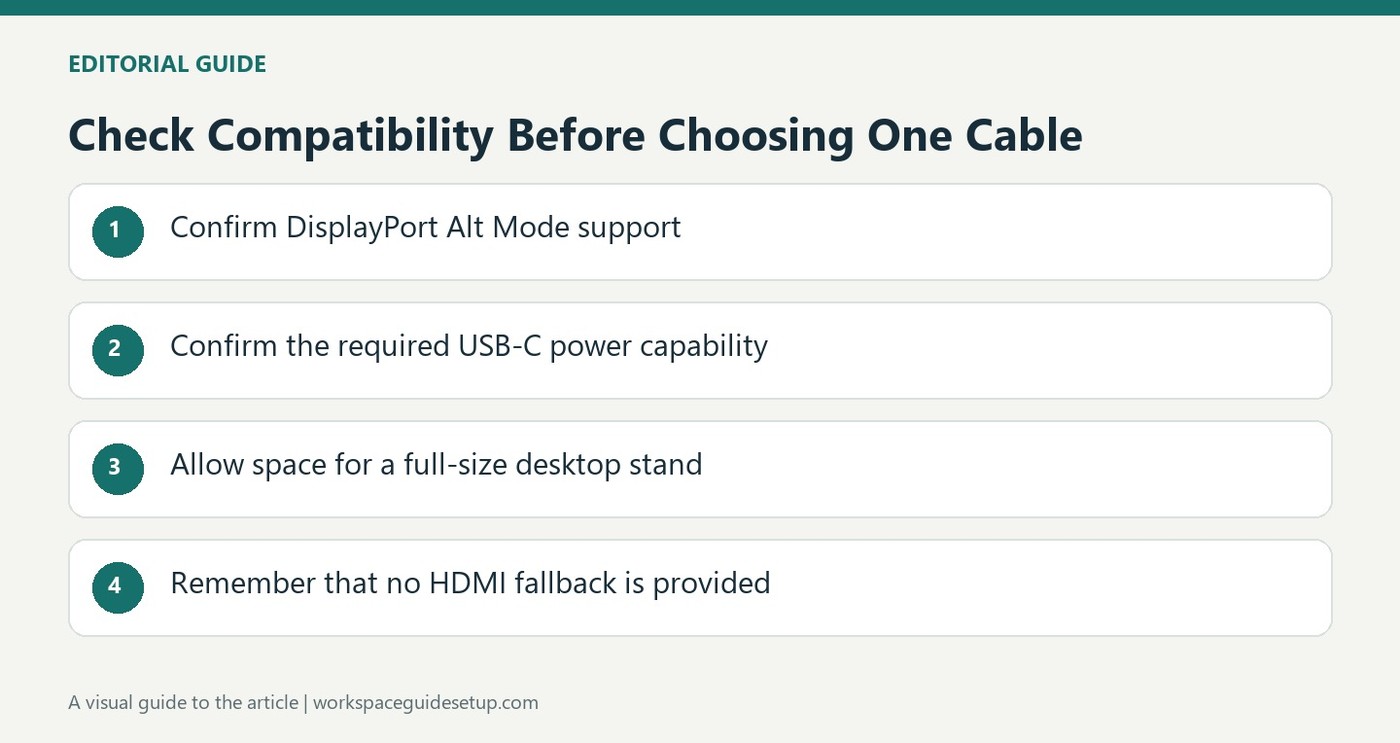
TechRadar describes ONE Monitor as a full-sized desktop display with a solid stand, despite its light and simplified construction. It draws both power and video through a single USB-C connection. The design removes a separate power brick and several conventional controls.
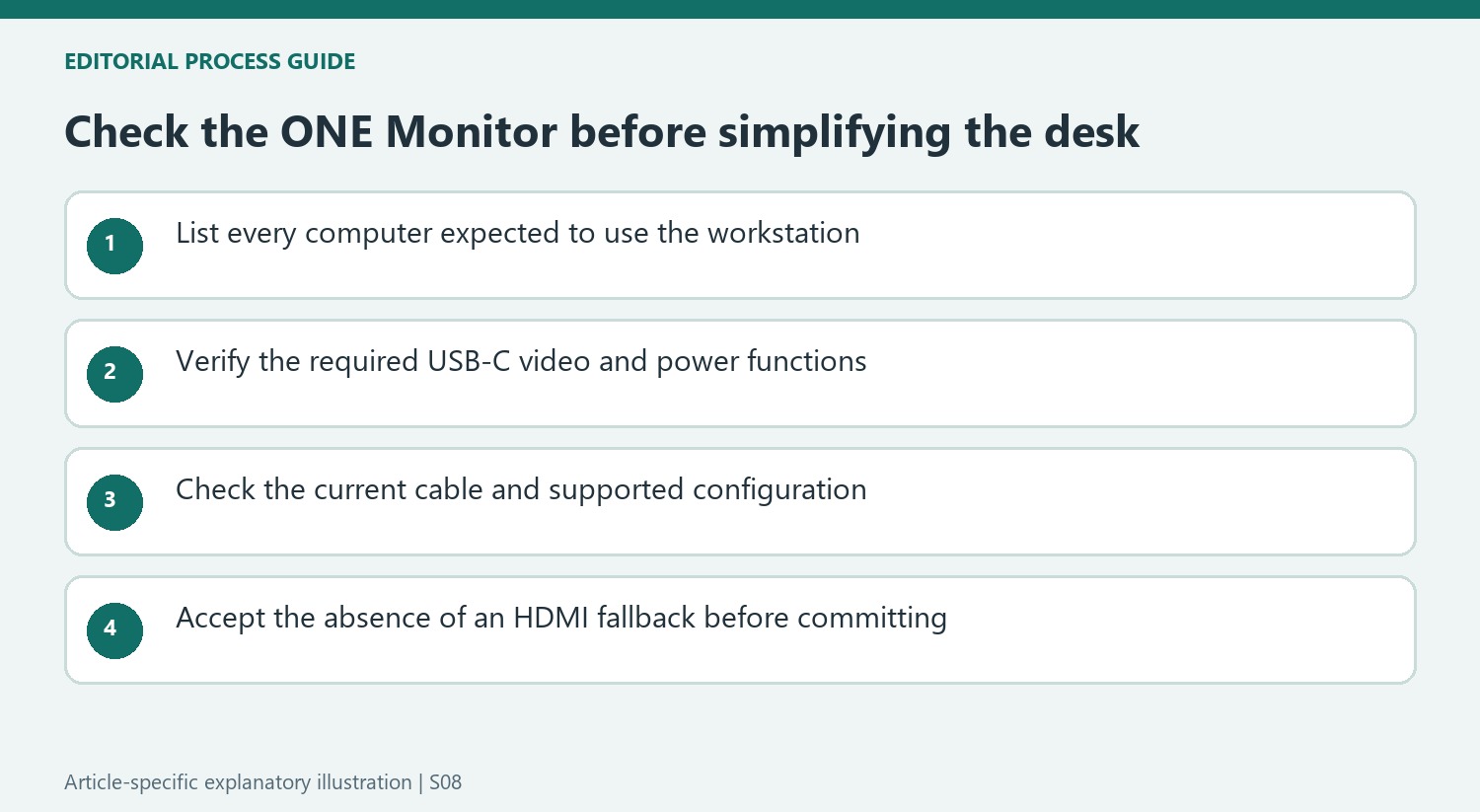
There is no HDMI fallback, so the computer must provide the required USB-C Power Delivery and DisplayPort Alt Mode support. Confirm that connection before planning a minimalist workstation around it. A reduced cable count does not make the screen a portable monitor or a flexible match for every laptop.
Verify the laptop before simplifying the wiring
The source describes a display that depends on a compatible computer connection for both signal and power. An HDMI-only computer cannot use a fallback input because none is provided. In a shared office, check every intended laptop rather than testing just the first user's machine. The simplicity of one visible lead relies on that underlying compatibility.
Distinguish a desktop design from a travel screen
TechRadar emphasizes the full-size panel and solid stand despite the reduced component count. That makes the proposed role a clean stationary workstation, rather than a screen designed primarily to pack into a bag. Its lightweight construction should not be treated as evidence that the stand, panel and working position suit frequent travel or temporary mounting.
Read sustainability claims as product claims
The announcement reports more than 90 percent recyclable materials and an idle state described as consuming no power. It also notes the absence of onboard controls and conventional performance customization. Those trade-offs may be acceptable when the purpose is straightforward office viewing, but the source does not establish specialist color or high-refresh performance. Compare the tasks and connection limits alongside the environmental claims before reorganizing an entire desk around the design.
Make host compatibility a condition of the whole plan
The absence of a separate video input changes how this display should be evaluated. With a conventional monitor, a different lead or input may offer another route from an older computer. The reported ONE design removes that fallback. List every intended host before building a shared station around it, including any work-issued laptop whose USB-C functions may differ from a personal machine with a similar-looking socket.
Confirm the required video and power behavior in current documentation and test a supported combination where possible. A connector's shape is not enough to establish the full chain. The source's criticism is therefore practical rather than merely a preference for more ports: when the one connection is incompatible, the desk cannot recover its display function by selecting HDMI. A clean cable arrangement depends on that technical condition remaining true for future hosts as well.
Read the sustainability story with the evidence available
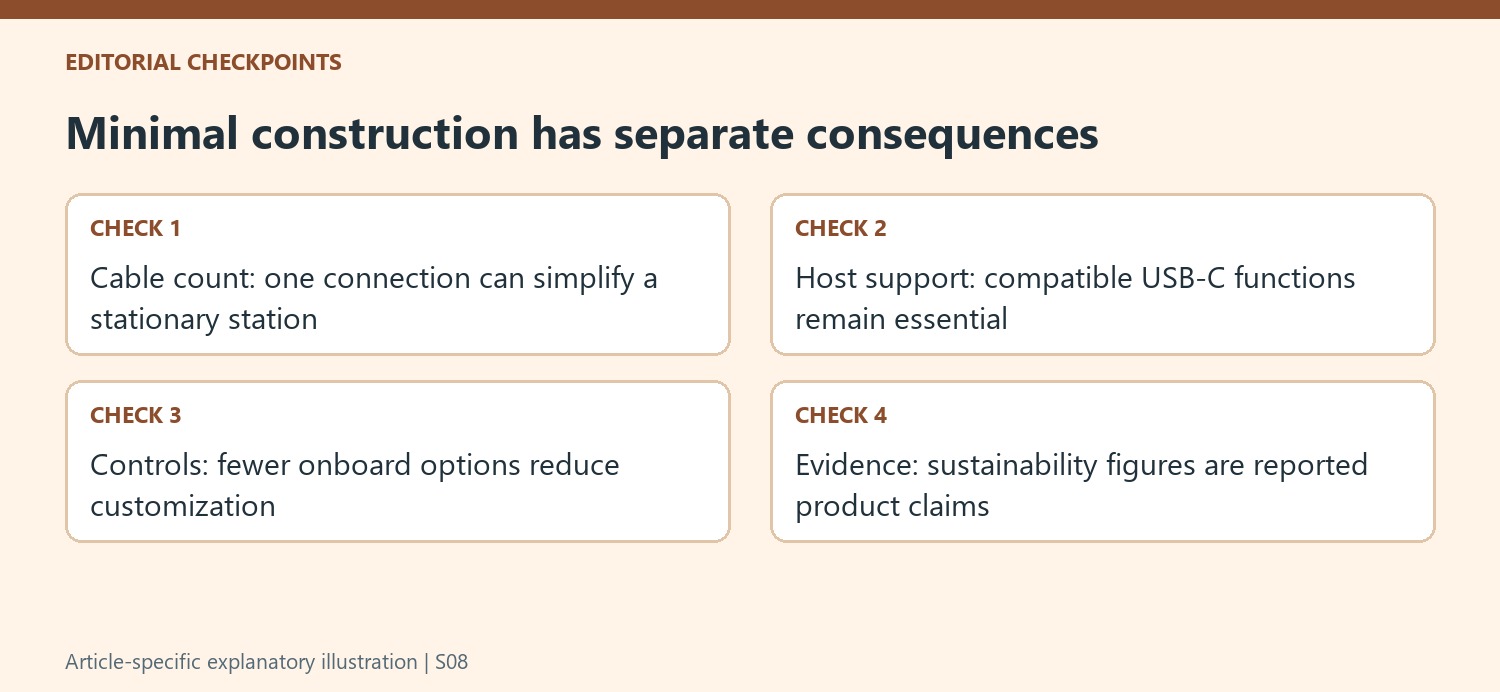
The article reports reduced components, a high proportion of recyclable materials and an idle-power claim as part of the product's positioning. It does not present its own lifecycle assessment, independent energy measurements or local recycling arrangements. Keep those claims attributed to the announcement. Recyclable construction and actual end-of-life recovery are also different questions when deciding how the product fits a particular office's equipment policy.
Similarly, removing conventional controls simplifies the physical interface but leaves fewer ways to adapt the display when a task or user changes. Identify which settings are genuinely needed for routine work before treating their absence as either a benefit or a defect. The feature does not establish specialist color performance or high-refresh suitability. Those limits matter if the same desk alternates between ordinary documents, visual production and demanding leisure uses.
Distinguish a clean permanent station from a mobile one
A lightweight panel and one visible cable can reduce the clutter of a stationary workstation without making the display a travel accessory. The source explicitly emphasizes its full-size format and solid stand. Consider how it will be placed, stored and handled in the actual room rather than comparing it only with smaller portable screens. A product can serve a simple desk well while offering little advantage for someone who repeatedly packs equipment into a bag.
For a shared office, also consider what happens when the main computer is replaced or a visiting user arrives. The intended simplicity is strongest when the compatible connection is known and the display task remains stable. Verify the current product configuration, support information and required cable rather than drawing conclusions from appearance alone. The useful question is whether this particular reduction in features matches the planned workflow, with the connection limitation accepted as part of the design.
References
- This stylish, recyclable monitor promises zero idle power use but becomes useless if you have the wrong laptop. TechRadar; Efosa Udinmwen.


Bir Cevap Yaz
E-posta adresiniz yayınlanmayacak. Gerekli alanlar * ile işaretlenmişlerdir.